
Living in University City, Missouri, is one of the St. Louis area’s most vibrant inner-ring suburbs. It’s got everything.
Just minutes from Washington University in St. Louis, University City combines a highly walkable commercial district, a diverse mix of housing options, and a thriving local arts scene.
It’s one of the best places to live if you want plenty of nightlife options, charming brick homes with character, and tree-lined streets with plenty of parks nearby.
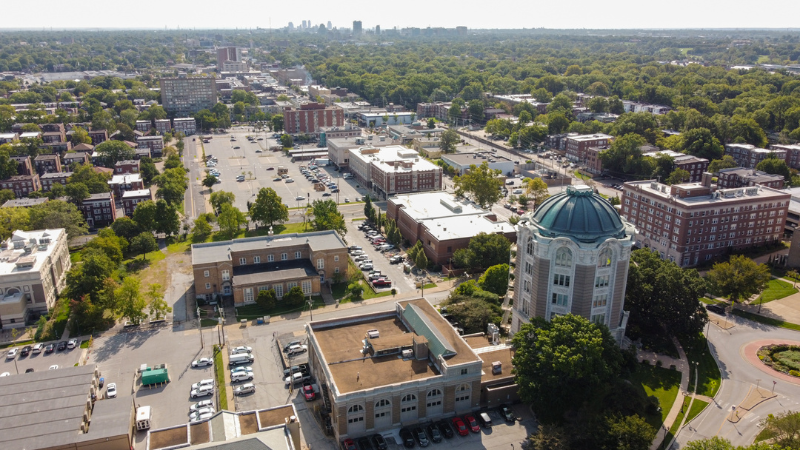
New to U-City? This area guide will give you an inside look at what makes University City such a unique place to live.
A Quick Look At University City
University City is best known for the Delmar Loop, aka “The Loop.”
It’s a lively stretch along Delmar Boulevard that is known for its restaurants, music venues, theaters, and locally owned shops and hangout spots.
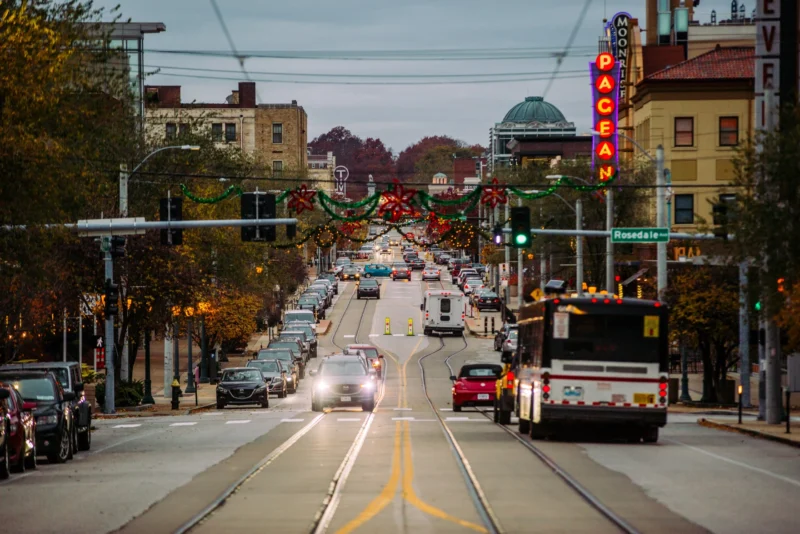
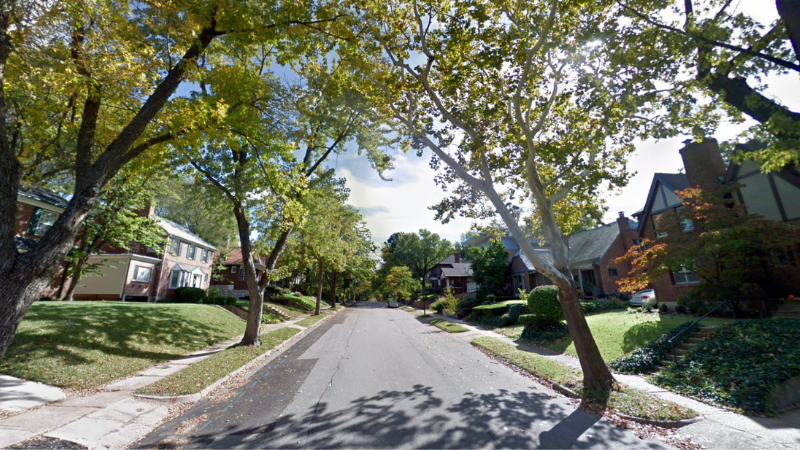
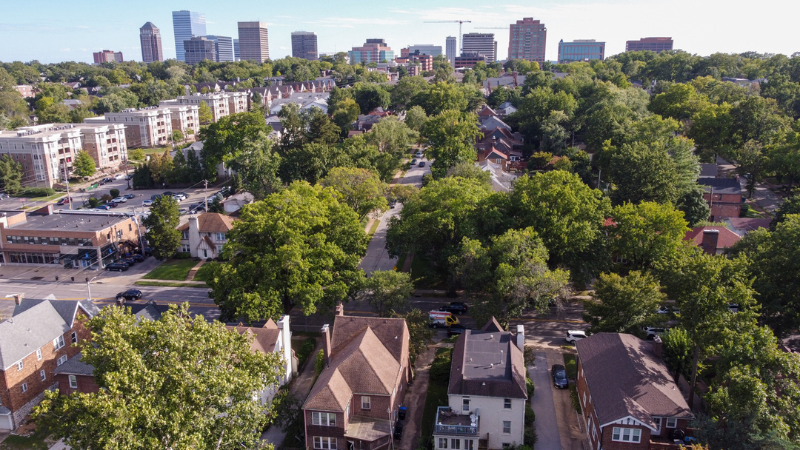
University City’s residential streets showcase a wide range of architectural styles, from early 20th-century brick homes to smaller multi-family buildings. You’ll also find newer homes scattered throughout.
The diversity of University City real estate contributes to the eclectic feel and gives each block a distinct feel.
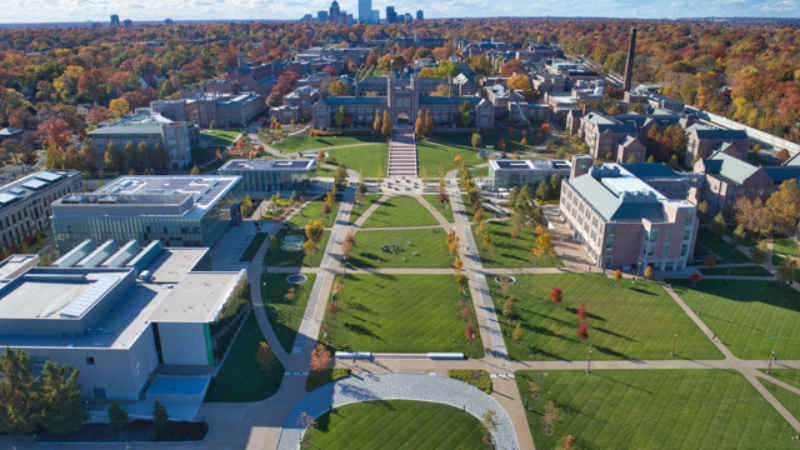
The city’s close connection to Washington University shapes much of its character, bringing academic influence, arts programming, and a steady flow of college students, faculty, and longtime residents.
You’ll often hear locals shorten the name to “U-City.”
| Fun Fact: University City got its name due to its proximity to Washington University. You’ll also see many streets named after well-known colleges and universities, like Amherst, Colgate, Stanford, Princeton, Cornell, Dartmouth, Tulane, and Purdue. |
University City is great for people who value walkability, culture, and variety. It’s perfect if you appreciate living in a place where no two neighborhoods or streets feel exactly the same.
It’s great for a flexible lifestyle, whether you want to walk to a coffee shop, have an easy commute to WashU, or access the surrounding areas of Olivette, Ladue, and Clayton.
U-City: Where Campus, Culture, and City Life Meet
University City is located 15 minutes west of Downtown St. Louis. It’s located in Mid County, which is the central region of St. Louis County.
University City is bound by I-170 to the west, smaller municipalities like Hanley Hills and Vinita Park to the north, West End to the east, and Clayton to the south
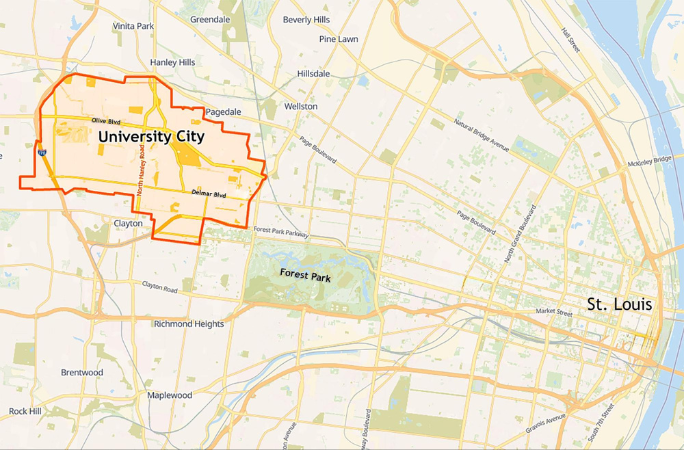
U-City is located along the northwest corner of Forest Park, which is great for quick access to major attractions like:
- The St. Louis Zoo
- Art Museum
- Forest Park golf course
- The St. Louis History Museum
- The Muny
Delmar Boulevard serves as the main east–west commercial corridor through U-City and is just minutes from Downtown Clayton, the county seat of St. Louis County. Delmar is where you’ll find The Loop.
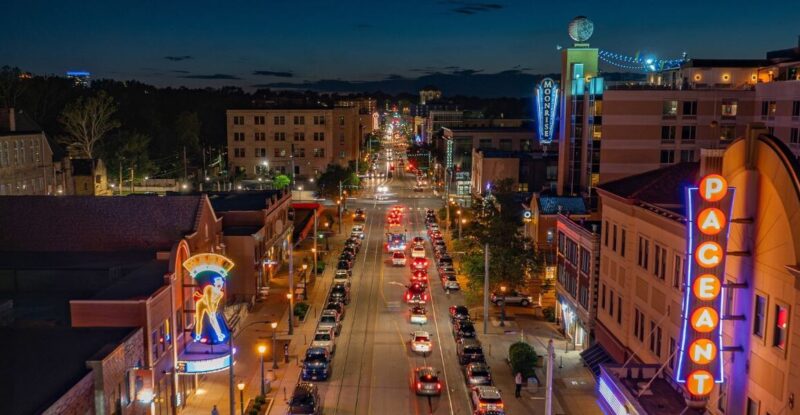
Compared to many surrounding suburbs in the greater St. Louis Metro Area, University City feels more urban due to its population density.
In fact, on average, U-City is more densely populated than St. Louis City.
- University City population density: 5,967 people per square mile.
- St. Louis City population density: 4,886 people per square mile.
*Numbers based on 2020 data from the U.S. Census Bureau
Commute Times To Nearby Areas
Here’s how long it will take to get to nearby hotspots, assuming light traffic:
| Forest Park | 7 min |
| Downtown St. Louis | 16 min |
| St. Louis University (SLU) | 17 min |
| Washington University (WashU) | 6 min |
| Central West End | 15 min |
| St. Charles | 24 min |
| Richmond Heights | 9 min |
The Character of University City
One of the defining features of University City is how it feels different everywhere you go.
Neighborhoods, architectural styles, and commercial areas feel noticeably different from block to block, creating a city that feels active and diverse.
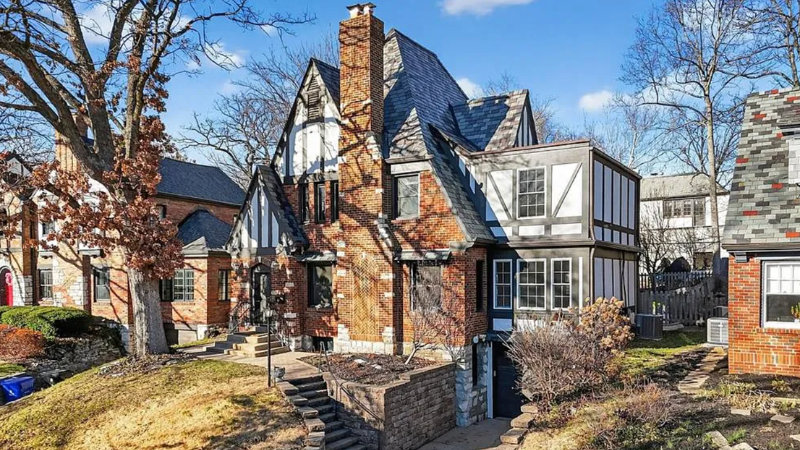
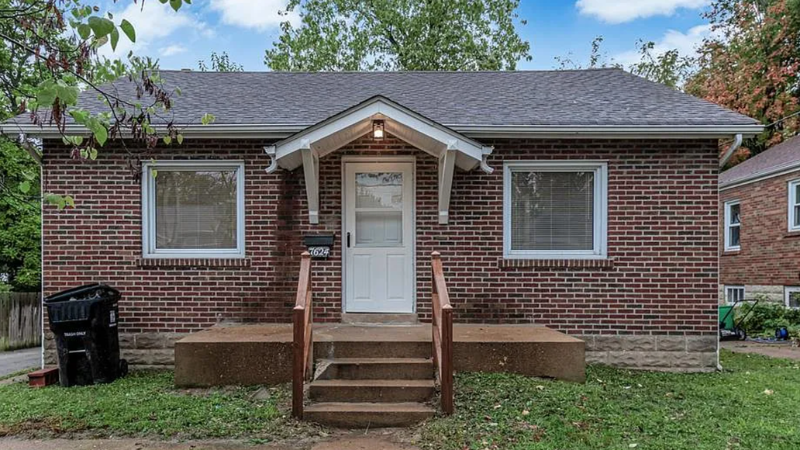
While homes throughout U-City are typically older, price points and newness vary by neighborhood.
Neighborhoods south of Delmar Boulevard, particularly near Washington University, generally feature higher-priced homes, while neighborhoods north of Delmar Blvd offer more accessible price ranges.
These differences are mirrored in the surrounding streetscapes and commercial areas, creating a city that feels diverse and dynamic with a distinct local feel.
What’s It Like to Call U-City Home?
Compared to outer-ring suburbs, like Chesterfield or Creve Coeur, University City feels denser, has more character, and is more eclectic. It’s busier, louder in some places, and more visibly shaped by student life and nightlife, especially near Delmar and the Wash-U campus.
At the same time, quieter residential streets still exist, offering a different experience depending on what part of the city you’re in.
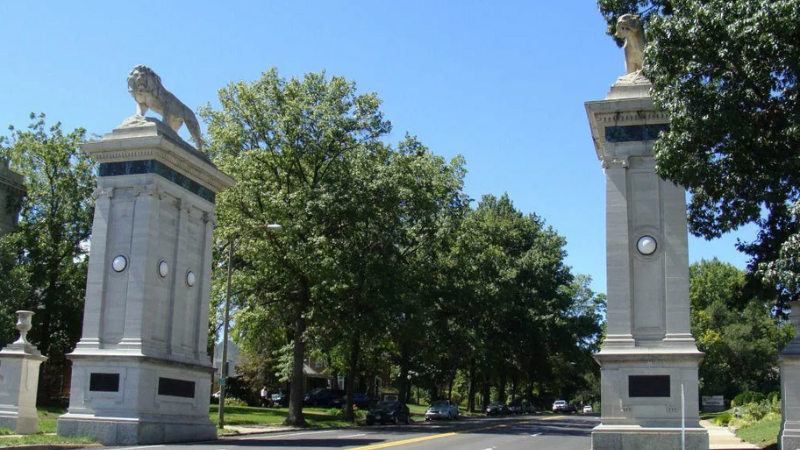
You’ll see longtime residents, students, artists, and professionals going about their daily business, enjoying coffee shops and neighborhood parks, which gives U-City a sense of college-town meets city.
Cost of Living
Overall, the cost of living in University City is about 7% lower than the national average but higher than Missouri’s state average.
Here’s how everyday costs break down:
- Housing: The median selling price of a home in U-City in 2026 is $364,000
- Groceries: About 3% lower than the national average
- Healthcare: Generally in line with the national average
- Property taxes: Higher than both the United States and Missouri averages, consistent with much of St. Louis County
This makes U-City more affordable day to day, with higher housing and property taxes offset by lower costs in other areas of life.
*Census data from MARIS, Homesnacks, and the Census Bureau
Delmar Loop and Wash-U
The Delmar Loop and Washington University play a major role in shaping the U-City lifestyle.
The student population brings a youthful energy, and many local businesses cater to a younger crowd, while iconic establishments connect the area to St. Louis’ rich history.
Together, they create a mix that offers something for everyone, contributing to the city’s reputation as an intellectual, diverse, and culturally vibrant hub. And there’s a great entertainment and food scene!
What are the Neighborhoods Like in U-City?
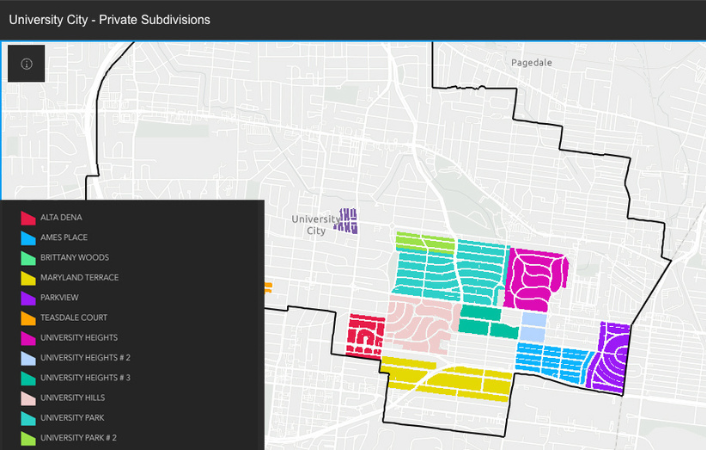
Throughout University City neighborhoods, you’ll see mostly brick, stone, and stucco homes. In the southern part of U-City, especially closer to Delmar, you’ll find several gated communities with a strong sense of neighborhood identity. Some neighborhoods have infill of newer custom homes.
You’ll find a blend of single-family homes, duplexes, condos, and apartment buildings throughout town.
Homes in University City can range from about $100,000 on the low end to over $2 million in some of the luxury neighborhoods bordering Clayton.
Delmar Loop: Parkview Gardens
This neighborhood is just steps away from Delmar Loop, with quiet, tree-lined residential streets right alongside the Loop’s energy. Most of the parking here is street parking, so having access to a garage is a plus!
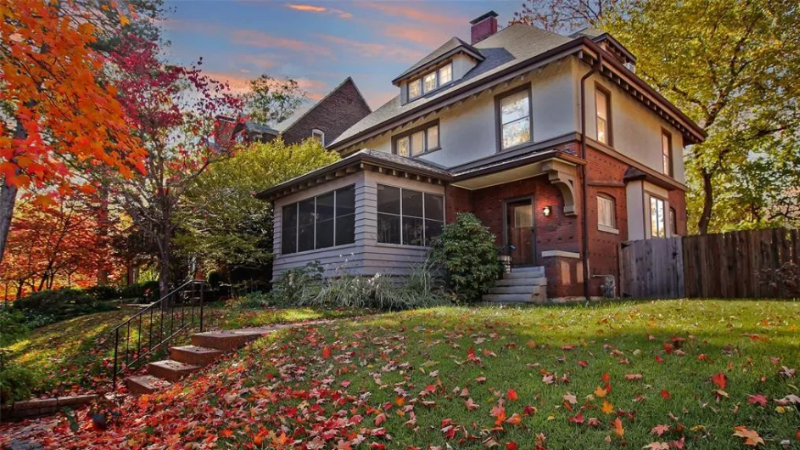
Many of the homes here date back to the early 1900s, and the area offers a wide range of housing types, including:
- Older apartment buildings and small multi-family properties
- Single-family homes, such as bungalows, Tudor, and Georgian Revival
- Condos and attached townhome units, often in mixed-use buildings
- Newer and older apartment communities
Prices can vary widely by housing type, with larger single-family homes priced at $600,000–$800,000 and condos at around $300,000.
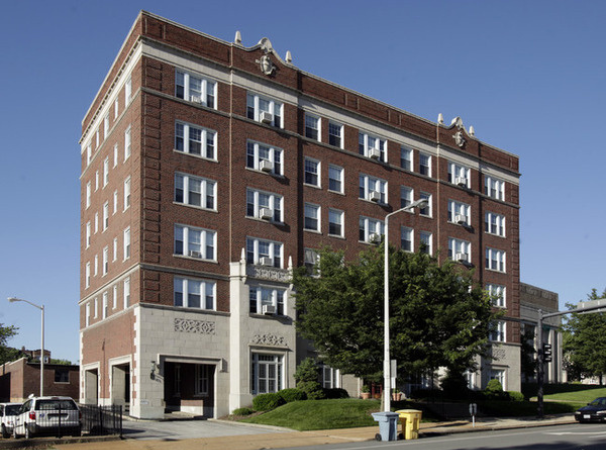
Portions of the area are also part of a designated Historic District, with guidelines in place to help preserve its architectural character.
University Heights No. 1
University Heights No. 1 sits just west of the Delmar Loop and behind University City’s historic City Hall.
This neighborhood was one of University City’s earliest planned subdivisions, developed in the early 1900s by Edward Gardner Lewis, the founder of University City.
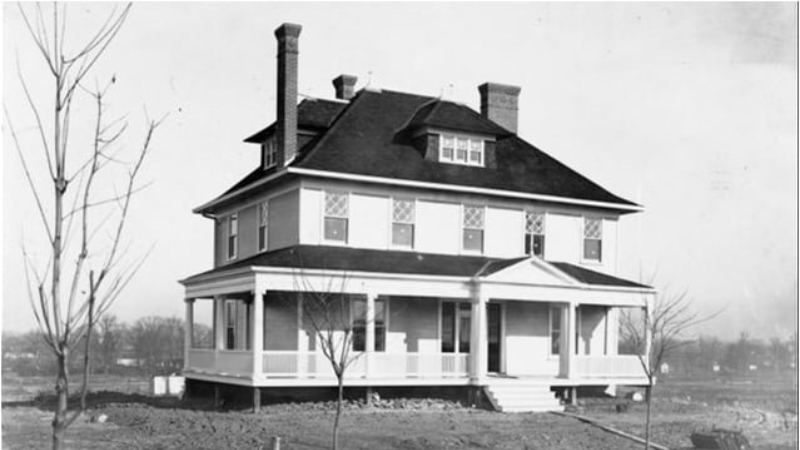
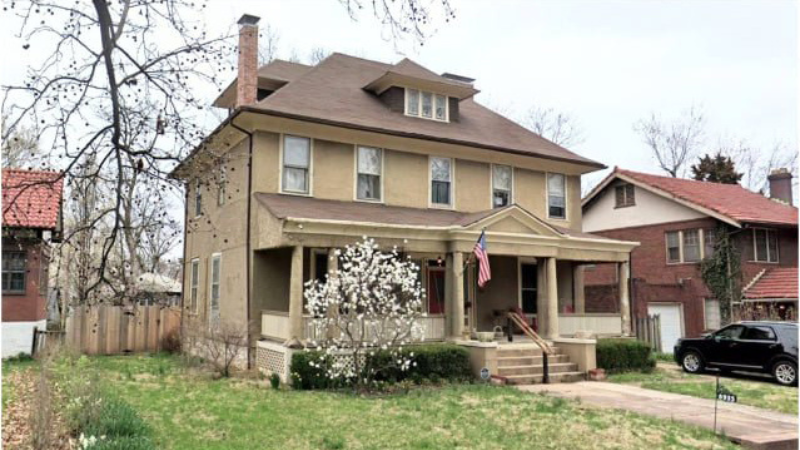
It was part of the “City Beautiful” vision tied to the 1904 World’s Fair, and today the area is listed on the National Register of Historic Places to help preserve its historic character.
Homes here showcase a wide range of early 20th-century architectural styles, including:
- Tudor Revival
- Arts and Crafts
- Queen Anne
- Bungalows
- Shingle Style
- Eclectic designs that combine multiple styles
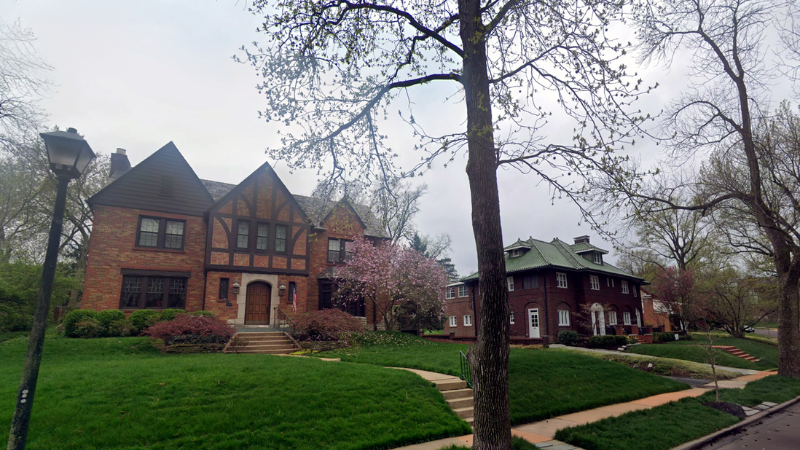
Most homes here were built between the early 1900s and the 1920s and tend to be more expensive, though values can vary widely depending on the home’s condition and specific location.
There are million-dollar homes in this area as well as homes around $500,000, most on large lots with mature trees.
North Central
North Central sits in northwest University City, bordered by Olive Boulevard to the south.
Most homes are mid-century bungalows and single-level ranch-style houses, built between the 1940s and 1960s.
Home prices generally range from $100,000–$350,000, with medium-sized lots, mature trees, and sidewalks throughout the neighborhood.
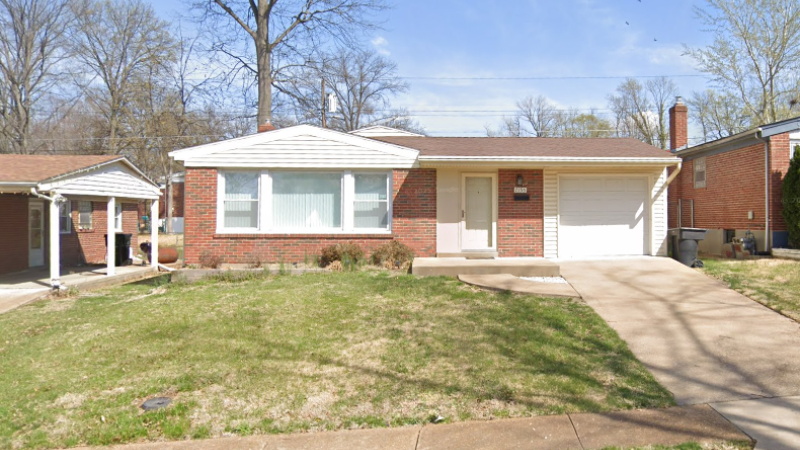
Residents describe the North Central area as quiet and dog-friendly, with a straightforward residential feel and a strong sense of community. While some everyday spots are walkable, most people here rely on a car for errands and commuting.
University Hills
University Hills is a well-established residential neighborhood in University City, located just southwest of the Delmar Loop and close to Washington University.
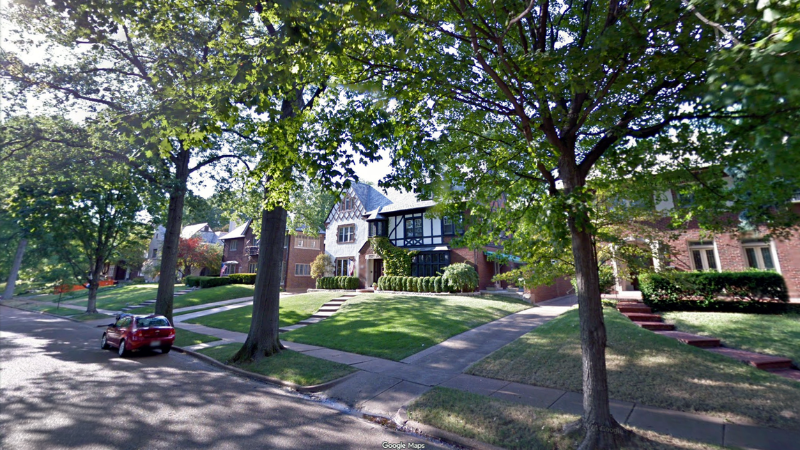
It’s next to University Heights, and the two have similar housing styles, but they have separate neighborhood rules.
The neighborhood is known for its larger, historic homes built primarily in the 1920s and 1930s.
Architectural styles vary but tend to reflect classic early 20th-century designs, especially in the northern portion of the neighborhood, where homes are generally larger and more detailed. Southern sections of University Hills closer to Clayton feature smaller homes with similar character.
Home values here are typically higher than in many other parts of University City, often ranging from the mid-$300,000s into the $1 millions, depending on size, condition, and location.
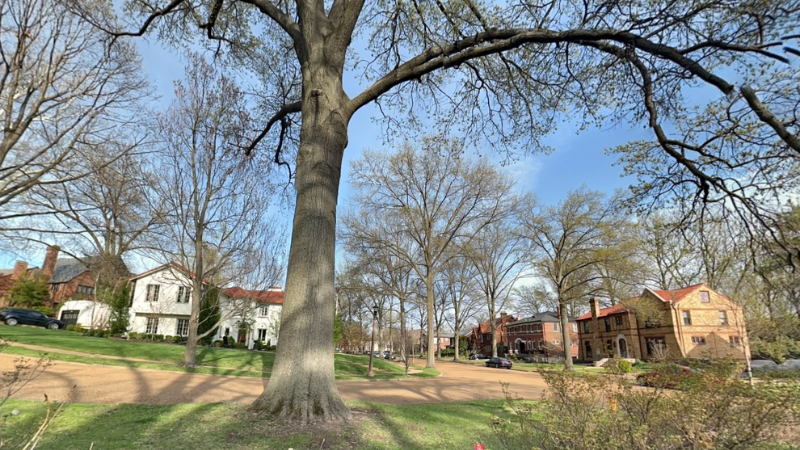
While there isn’t a traditional HOA, the neighborhood does have an active subdivision association. Overall, University Hills feels quiet, residential, and established, with tree-lined streets, sidewalks, and a strong sense of neighborhood continuity.
Midland Core
Midland Core is in north-central University City, around Midland Boulevard, just north of the Delmar Loop.
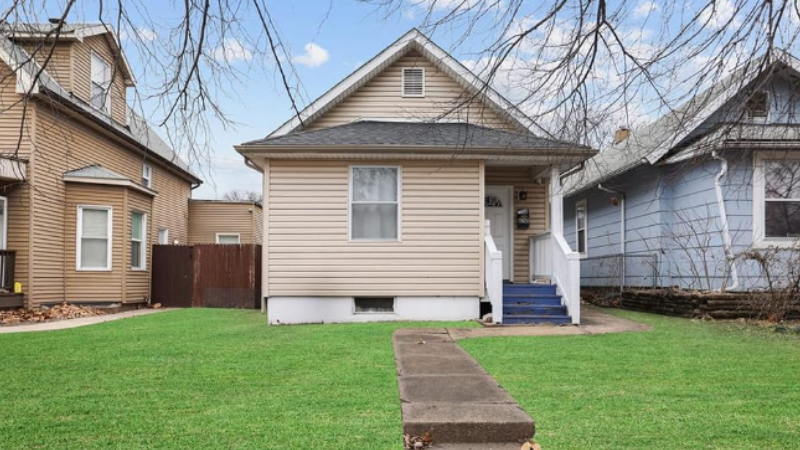
Most homes date back to the early 1900s through the 1930s, with a mix of single-family houses, small apartment buildings, and multi-family properties.
Home prices range from around $135,000 to $300,000+, with medium-to-generous lot sizes featuring mature trees and front lawns.
The neighborhood blends walkability to the Delmar Loop with quiet residential streets and a mix of owner-occupied and rental properties.
Blackberry / Village of University Place
The Blackberry area sits in central University City, centered around Blackberry Avenue between Delmar Boulevard and Olive Boulevard, just north of the Delmar Loop.
The neighborhood features many historic homes from the 1930s and 1940s, alongside infill homes built in the 2000s and 2020s, which blend seamlessly with the area’s historic charm.
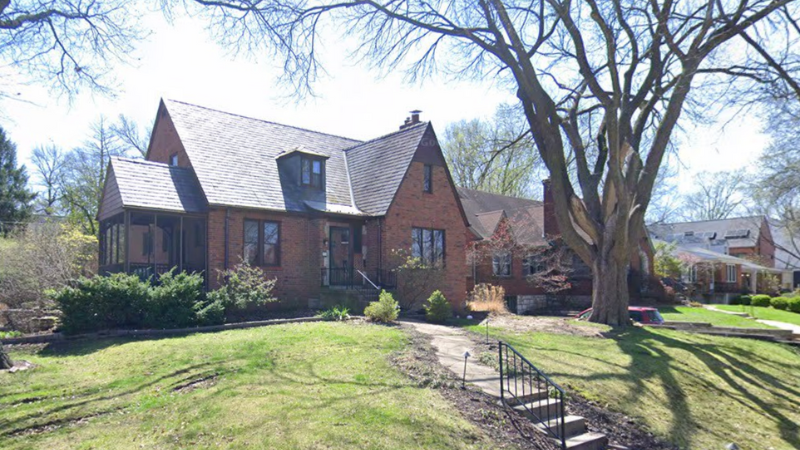
Home prices are on the higher end for University City, ranging from around $400,000–$500,000 for typical homes, with some larger or newer properties reaching well into the million-dollar range
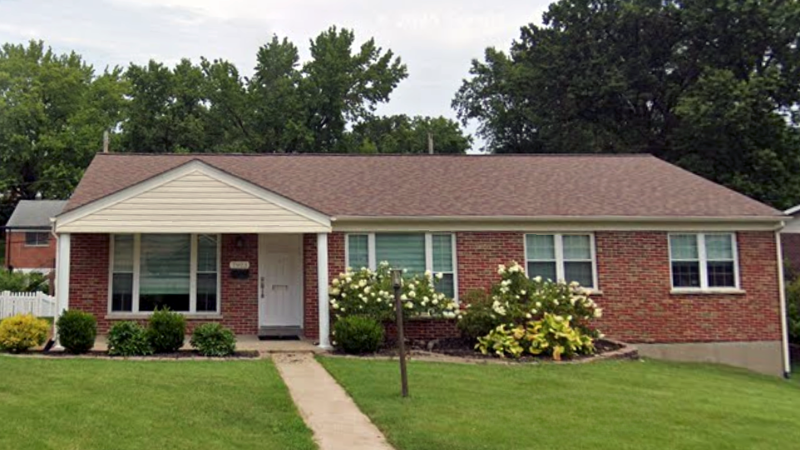
The area balances walkability with a calm, residential feel, with many streets just steps from shops, transit, and amenities near Delmar. Its mix of housing types, mature trees, and sidewalks gives the neighborhood a classic, approachable, and urban-adjacent character.
Private Subdivisions
University City has several private subdivisions with their own governance rules, often beyond what is required by the City’s code.
Historic Homes in University City
One of the biggest draws of living in University City is the variety of historic homes and well-established neighborhoods.
Most of U-City’s housing stock dates to the early and mid-1900s, with streets lined by brick Tudors, classic Colonial Revival, and Spanish-style homes.
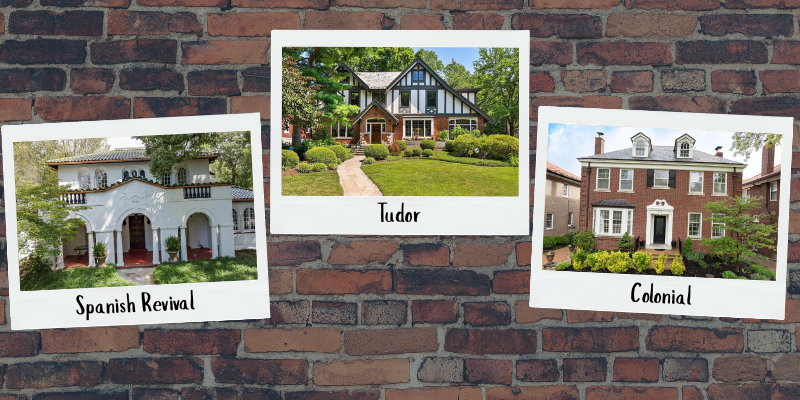
It is common to find details, like leaded-glass windows, original hardwood floors, and detailed front elevations, along with mature trees and sidewalks that make the blocks feel lived-in and walkable.
| Tip From The Experts: Thinking of buying a historic home in U-City? Make sure to get all the right inspections! Check the roof age, sewer lateral, masonry & tuckpointing, HVAC, foundation, and electrical. Some older homes in U-City have outdated electrical panels and knob-and-tube wiring, so it’s always good to get everything inspected. There are several flood plains in U-City, too, so double-check for basement moisture. |
Public Schools: University City School District
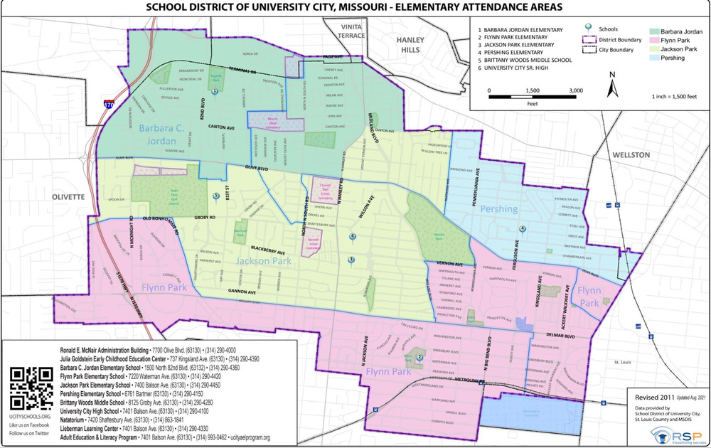
University City has its own public school system that offers plenty of extracurricular activities and gifted programs.
Pre-School and Elementary Schools
- Julia Goldstein Early Childhood Education Center
- Flynn Park Elementary School
- Jackson Park Elementary School
- Pershing Elementary School
- Barbara Jordan Elementary School
Middle School
Brittany Woods Middle School is part of the University City School District and serves students in grades 6 through 8. The school offers a range of academic programs, including support for Talented and Gifted students, and focuses on preparing students for high school.
U-City High School
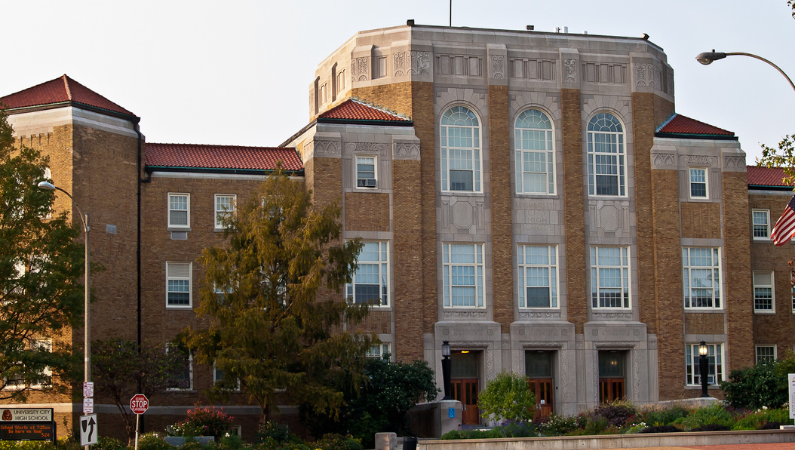
University City High School has about 815 students enrolled and serves all of U-City. They also have programs like AP, which gives students access to college-level work, and a Talented and Gifted Development program (TAGD).
Private School
Yeshivat High School is a Modern Orthodox Jewish high school located in University City, Missouri. It offers a dual curriculum that includes both college-preparatory secular studies and Judaic studies.
U-City Attractions: History, Entertainment, And Good Eats
Most of the action in University City centers on The Delmar Loop.
This entertainment district has something for everyone: boutiques for shopping, coffee shops, book stores, restaurants, bars, music venues, and more!
Here are some of the highlights from The Loop.
Restaurants
The Delmar Loop is great for foodies, with diverse food options, plenty of casual spots, and some more upscale options.
Here are some of our favorites in The Loop:
- Salt + Smoke: A beloved St. Louis BBQ chain, popular with locals for its smoked meats and casual, friendly vibe.
- Nudo House Delmar: A great casual spot for ramen and other Asian noodle dishes.
- Taco Buddha: Known for its inventive tacos that pull flavors from around the world, along with a strong craft beer selection and a casual atmosphere.
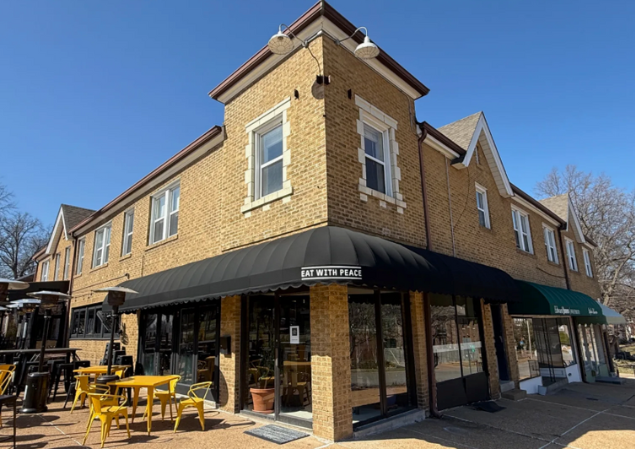
- Ranoush: Middle Eastern Cuisine featuring kebabs, hummus, baba ghanoush, and more.
- Amigo Sole Mexican Streetfood: A great spot for Mexican street food, tacos, and more.
- Nobu’s: An elevated dining experience for sushi lovers.
U-City Staples You Can’t Miss
Fitz’s Root Beer
It’s not just a family restaurant, it’s an institution!
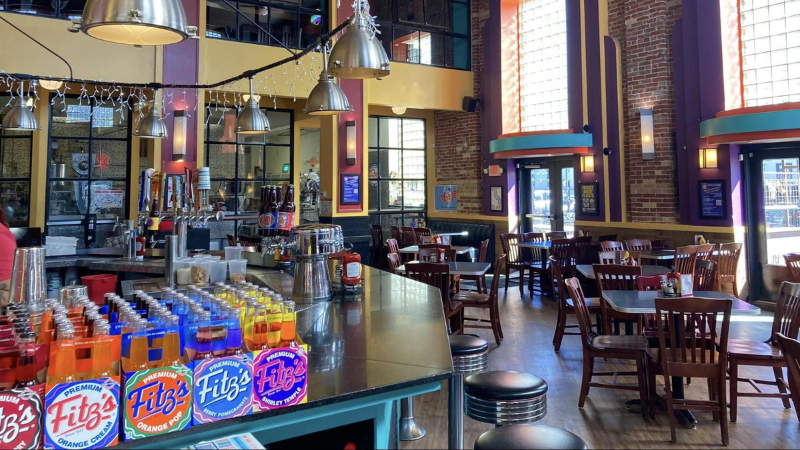
Fitz’s Root Beer was first created in 1947 and served at a hamburger drive-in, quickly gaining a loyal following.
When the Delmar Loop location opened in 1993, it brought back the original recipe and added a vintage 1940s bottling line, still in operation today for visitors to see in action.
This is a great place to eat. It’s great for a casual hangout with the family or for catching up with old friends. Be sure to get a root beer float!
Blueberry Hill
This St. Louis landmark restaurant and music club is best known for hosting Chuck Berry in his later years, with his famous performances on the third Wednesday of each month until 2014.
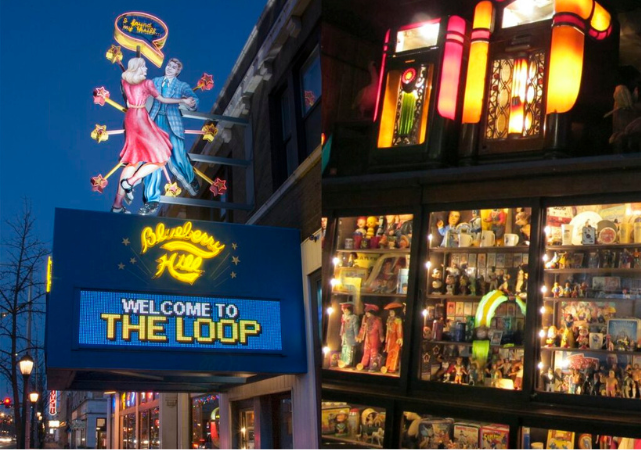
The venue embraces its history and roots through its nostalgic decor, and it’s a great spot to grab a cheeseburger, play a game of darts, or hang out with friends.
It’s also a popular spot for university students, adding to the lively, welcoming vibe.
Things to See and Do: Delmar Loop Landmarks
Here are some of the Delmar Loop’s most recognizable sights you’ll naturally encounter just by walking the street, from music landmarks and public art to longtime local icons.
- Chuck Berry Statue: located between Fitz’s and Salt +Smoke.
- St. Louis Walk of Fame: Stars and biographical plaques throughout The Loop of famous people who have had an impact in St. Louis.
- Historical Markers: The Loop has several historical markers that tell the stories of local legends, such Author Jonathan Franzen and painter Carl Wimar.
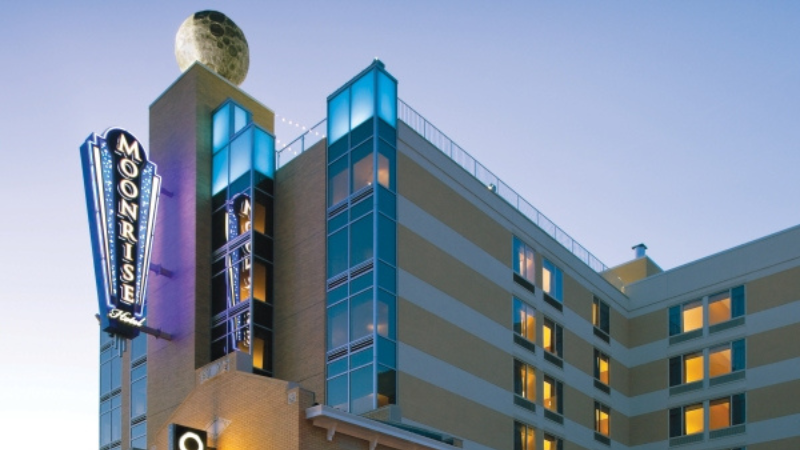
- The Moonrise Hotel: Known for its vintage illuminated sign and rotating moon sculpture, this boutique hotel marks the skyline and is home to a popular rooftop bar.
- Vintage neon signs and murals: Music-themed murals and bold storefront signage give the Loop its eclectic, artsy feel.
- The Loop Trolley: This public transit option operates May through October, is free to ride, and is a convenient way to get between Forest Park and Delmar Loop.
Music and Performance Venues in U-City
- The Pageant: A well-known music venue that hosts a variety of national acts.
- The Center of Creative Arts (COCA): a multidisciplinary art space that has theatrical performances, dance performances, art galleries, and classes.
- Tivoli Theatre: A historic theater space turned church now offers community movie viewings that open with a pre-show from local performers on specified Fridays.
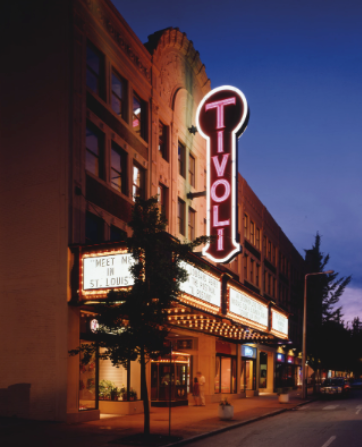
- The Duck Room: The legendary music room inside Blueberry Hill.
- 560 Music Center: A part of Washington University’s Campus, this historic art deco building has three performance spaces that host recitals, orchestra concerts, and more.
Beyond Dining and Music
In addition to music and performance venues and a wide range of restaurants and late-night hangouts, the Loop is also home to:
- Hatchet Haus Axe throwing.
- Magic Mini Golf
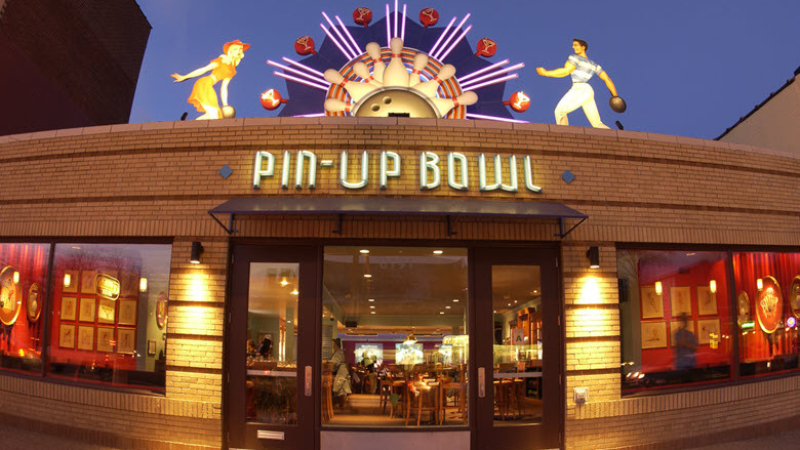
- Pin-Up Bowl
- W Karaoke Lounge
Parks and Recreation in U-City
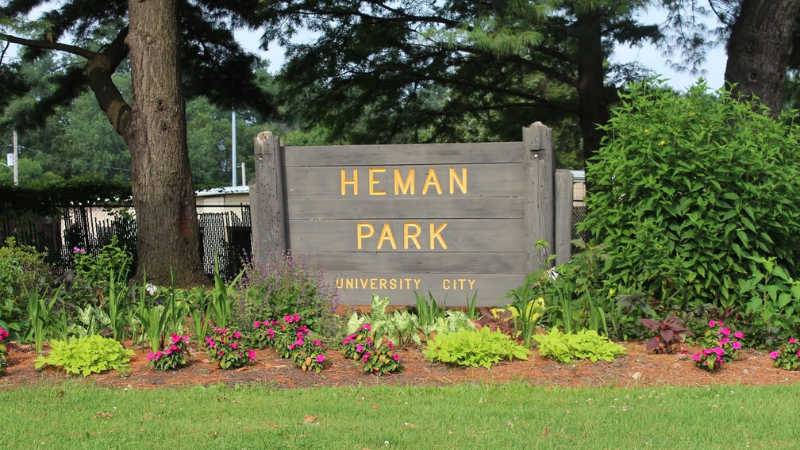
Heman Park
This 85-acre park hosts the University City Summer Band Concert Series in the summer and a seasonal farmers’ market with local produce, foods, and crafts.
It also has:
- Swimming pool
- Sports fields
- Basketball courts
- Playground
- Picnic pavilions
- community center
- Jogging course
Centennial Commons
U-City’s rec center, which is located in Heman Park, has:
- Fitness classes
- Indoor sports facility for team sports year-round
- Gymnasium
- Weight and cardio machines
- Indoor track
- Pickleball
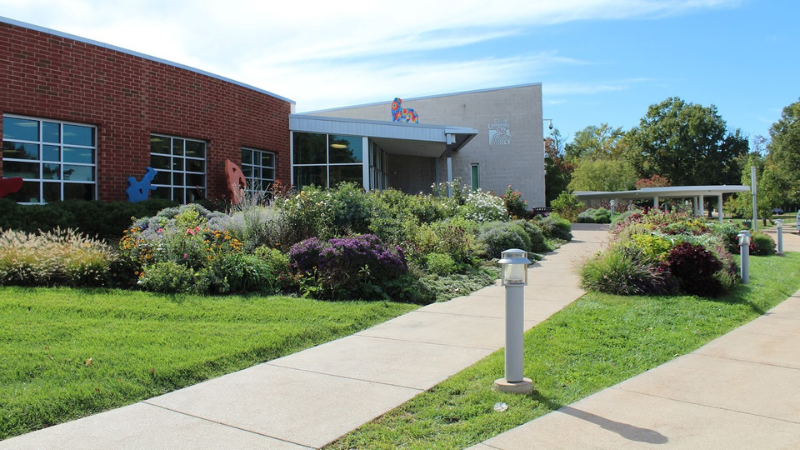
Ruth Park Golf Course
The Ruth Park Golf Course is a municipal golf course established in 1931.
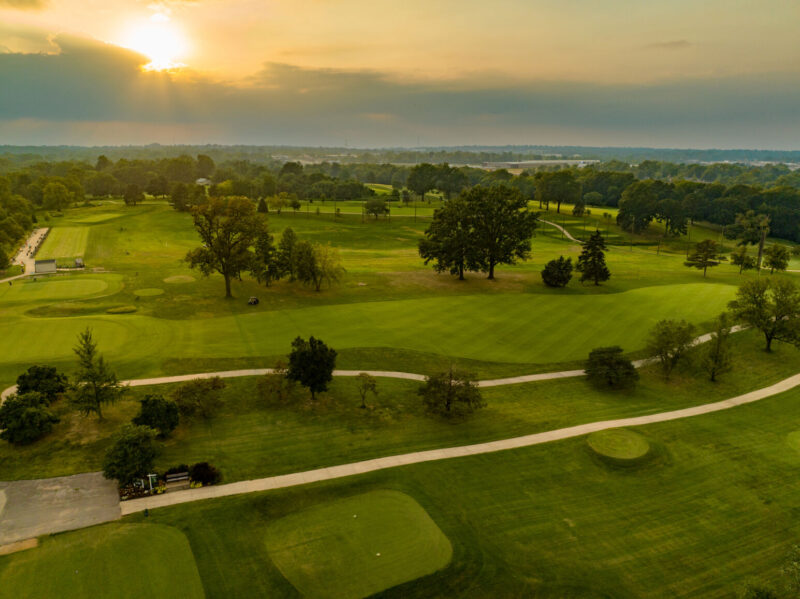
This 70-acre green space features a 9-hole course along with a driving range.
U-City Dog Park
Located at Vernon Ave and Pennsylvania Ave, right next to the River Des Peres, this members-only park has separate areas for large dogs and small dogs.
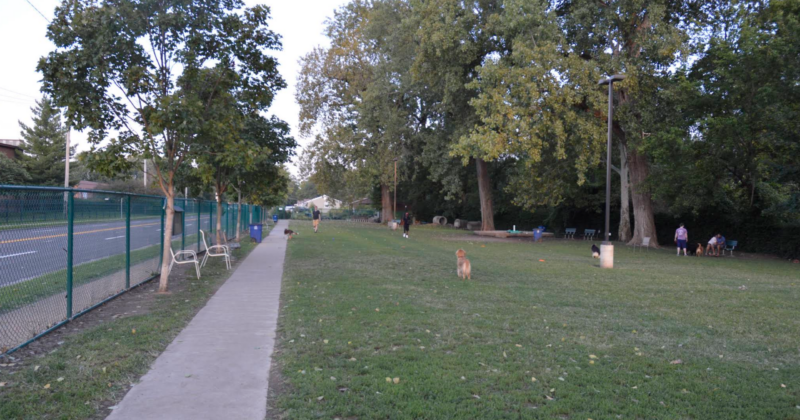
As of spring 2026, here’s the price of an annual membership to the U-City Dog Park:
- Resident: $40 for one dog; $60 for two dogs
- Non-Resident: $60 for one dog; $90 for two dogs
Centennial Greenway
The Great Rivers Greenway is a network of 140+ miles of trails and parks throughout St. Louis.
The greenways connect neighborhoods, providing routes for walking, biking, and running throughout the region.
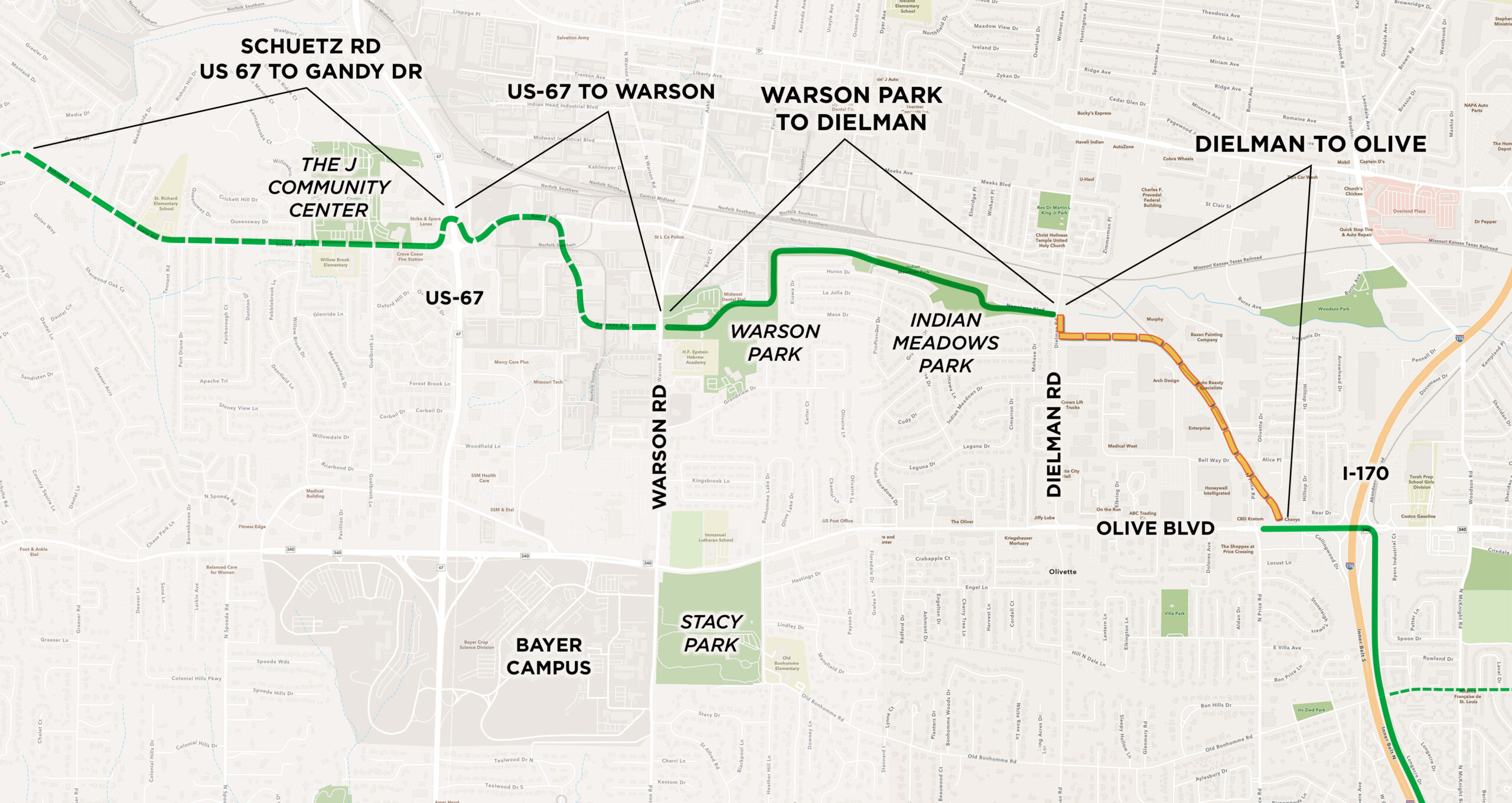
The Centennial Greenway segment passes through Forest Park and continues to the Delmar Loop, offering one of the best scenic, accessible paths for residents and visitors. It’s currently undergoing an expansion to make the greenway even better!
New Commercial District: Market At Olive
Major redevelopment is underway along Olive Boulevard, led by Market at Olive, a 50-acre commercial and retail hub that will bring national big-box stores, restaurants, and everyday services to University City.
Costco was the first to open, with Target and Dierbergs currently under construction and expected to open this year, alongside other well-known businesses and eateries.
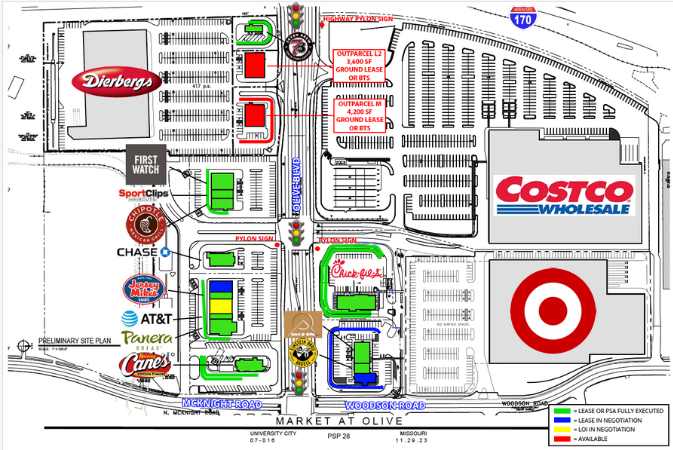
The goal is to transform Olive into a thriving commercial corridor that generates new jobs and tax revenue.
The city plans to reinvest a significant portion of that funding into the 3rd Ward, the area north of Olive Boulevard, as part of a broader revitalization effort.
New Residential Development: LOCAL On Delmar
LOCAL on Delmar is a new five-story residential building under construction just off Delmar Boulevard, expected to open in summer 2026.
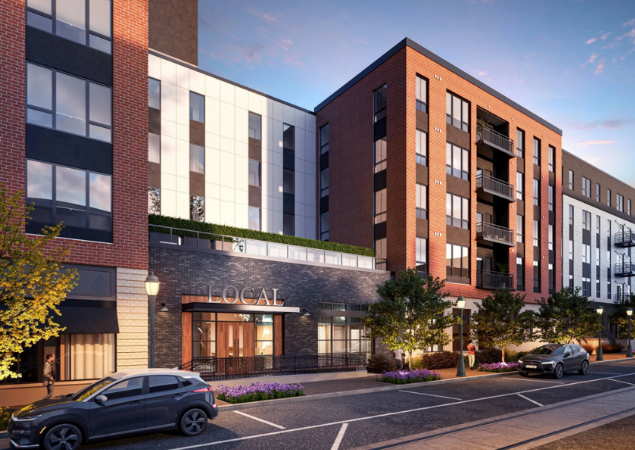
The project will add about 259 units, ranging from studios to three-bedroom housing units, along with amenities like a fitness center, rooftop pool, and shared community spaces.
Thinking About Calling University City Home?
University City residents tend to like being close to the action without living in the City of St. Louis.
If walkable streets, local restaurants, live music, parks, and cultural events are part of your ideal routine, U-City offers a lot within a relatively small footprint, but it still exists in the St. Louis metropolitan area.
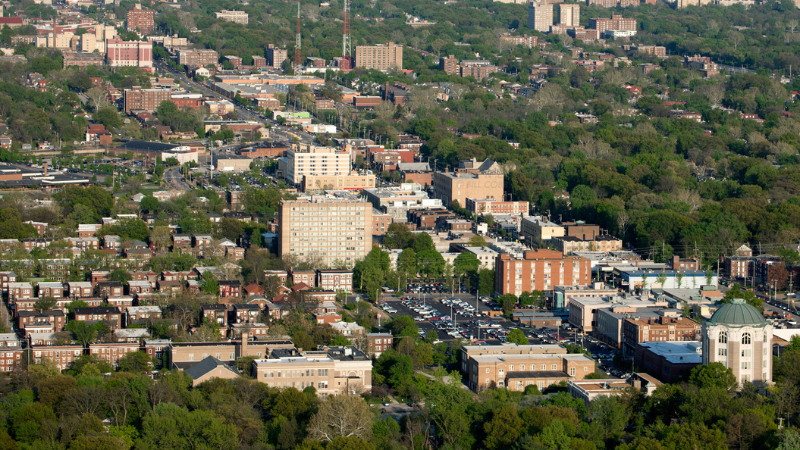
It’s a good fit for future homeowners who appreciate older homes with character, tree-lined streets, and neighborhoods where each block feels a little different.
The mix of historic architecture, apartments, and selective new development means there’s a wide range of living options.
University City also works well for people who value access and variety, easy trips to Forest Park, Washington University, Clayton, and the Delmar Loop, while being comfortable with a denser, more active environment in certain areas.
If you’re looking for home ownership in a place that feels creative, connected, and distinctly urban for a suburb, U-City is worth a closer look. Contact us today to get started with your U-City home search.