

Moving to St. Louis, Missouri? Welcome to the Gateway to the West.
With its fantastic food scene, historic neighborhoods, and low cost of living that is hard to beat, let’s explore what you should know before calling this Midwestern city home.
In this guide we’ll cover:
- What areas people mean when they say “St. Louis”
- Overview of St. Louis City neighborhoods
- St. Louis County: The suburbs of St. Louis
- St. Charles County: A bit farther than the suburbs
- Things to do in St. Louis
- St. Louisan culture
- Cost of living & housing
- The paperwork you have 30 days to do
- Common questions
- Final thoughts on moving to STL
Riverfront Location
St. Louis, MO sits on the iconic Mississippi River.
If you’re traveling from the east on I-64 you’ll hit St. Louis as soon as you cross the bridge over the river from Illinois.
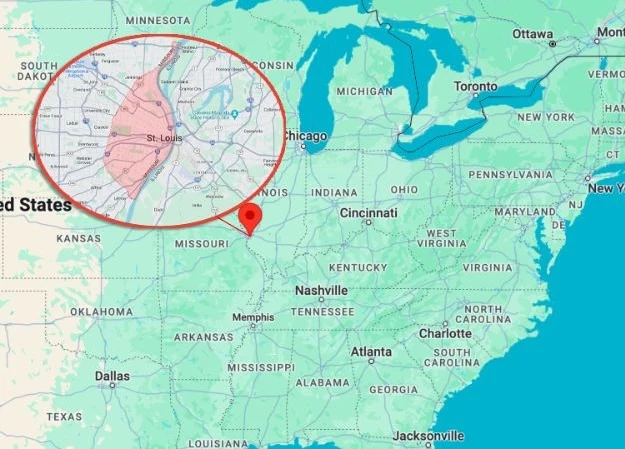
Depending on who you talk to and the context of the conversation, “St. Louis” can mean a few things.
New to St. Louis and Not Sure Where to Start Looking?
What Area Does ‘St. Louis’ Refer to?
In most conversations, “St. Louis” refers to St. Louis County and St. Louis City combined.
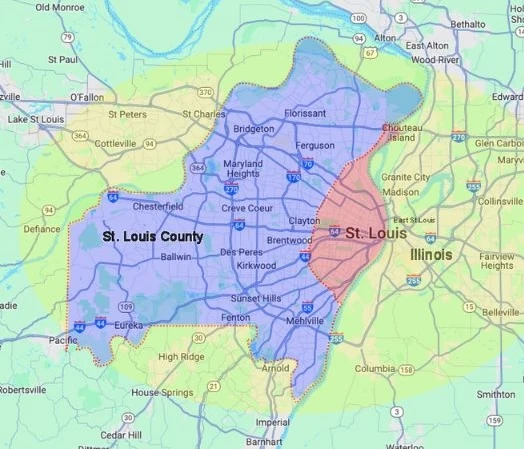
Sometimes, people say “St. Louis,” referring to the greater St. Louis Metro, which includes 12 counties.
People often say, “I’m from the Illinois side,” referring to the Metro East, as far east as Belleville, IL.
Once you become a St. Louisan, you’ll just say the neighborhood you’re in, regardless of whether you’re in the city or county.
 1 hour, 53 minutes, 8 seconds
 Living St. Louis
Why Some Addresses Say “St. Louis” if They Aren’t in St. Louis
When it comes to the city vs. the county, it can get a little confusing looking at addresses.
For towns in St. Louis County, you may notice that addresses will either say the name of the municipality or “St. Louis,” even though it’s not in St. Louis City.
According to a 2022 article by FOX2NOW, the postal service finds it easier to serve some places as “St. Louis” and others as their municipality name.
If your zip code begins with 631, you’re in St. Louis. Most of St. Louis County also begins with 631, but some areas like Chesterfield, Ballwin, and Fenton start with 630.
If you’re not sure whether to write your address as “St. Louis” or the municipality you live in, don’t worry. As long as you get the zip code right, your mail will reach the correct destination!
Helpful Tips
- If you have questions about public services or taxes, check out the government website of the city or county where you live.
- St. Louis City has a page for every neighborhood with links to the Neighborhood association.
- Most of the cities and towns in St. Louis County have their own government websites with helpful information.
St. Louis City Taxes
Speaking of taxes, residents of St. Louis City pay a 1% earnings tax that helps pay for public services.
You will also pay this tax if you work within city limits, even if you don’t live there. It is about 36% of the city’s general revenue. St. Louis County has no earnings tax, which is one of the practical differences between the two that nobody mentions.
Two More Missouri Tax Facts Worth Knowing Before You Move
Missouri charges personal property tax on your vehicles, every year. Cars, trucks, RVs, boats, motorcycles, trailers: you declare them and you are billed on them annually. Buyers moving from a state without one are routinely caught out by the first bill.
Missouri no longer taxes capital gains for individuals. House Bill 594 was signed in July 2025. It lets individuals deduct 100% of the capital gains they report federally when calculating Missouri taxable income, for tax years beginning on or after 1 January 2025. That made Missouri the first state in the country to do it.
Read that carefully before it changes your plans. For most people selling a primary residence, the federal exclusion already covered the gain. The change matters most on investment property, a business sale, or a very large gain.
It does not mean you pay no tax when you sell your house. Talk to a CPA about your own situation, not to us: we are a brokerage, not tax advisers.
St. Louis Aesthetic: Lots of Brick
One of the first things you’ll notice about St. Louis is the old brick buildings in every neighborhood.
Everything here is made of brick.
There’s a stronger concentration of brick homes and buildings as you get closer to the city. It’s less common in certain suburbs.
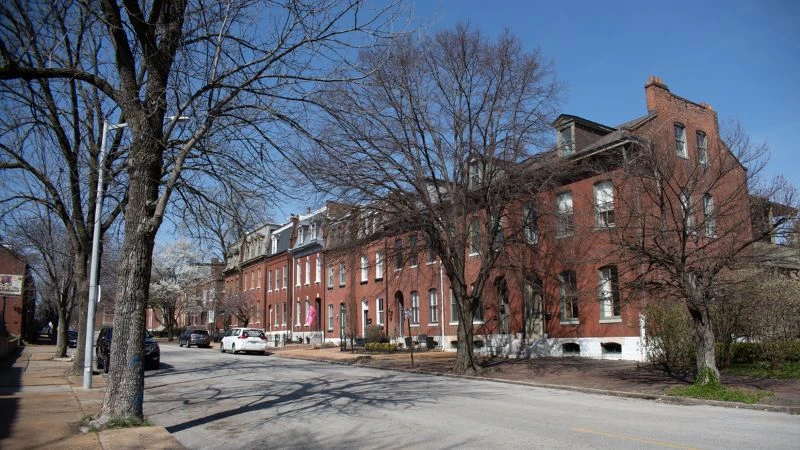
In the Mississippi Valley around St. Louis, abundant clay resources, coupled with burgeoning industry and a surge of immigrants seeking employment in the mid-1800s, set the stage for significant development.
With access to the railroad and the river, St. Louis emerged as a hub for distributing bricks to cities like Chicago and New York.
Since the bricks were locally produced in St. Louis, they were cheap.
This led to their widespread use in constructing everything from modest working-class residences to decorative mansions, breweries, and other businesses.
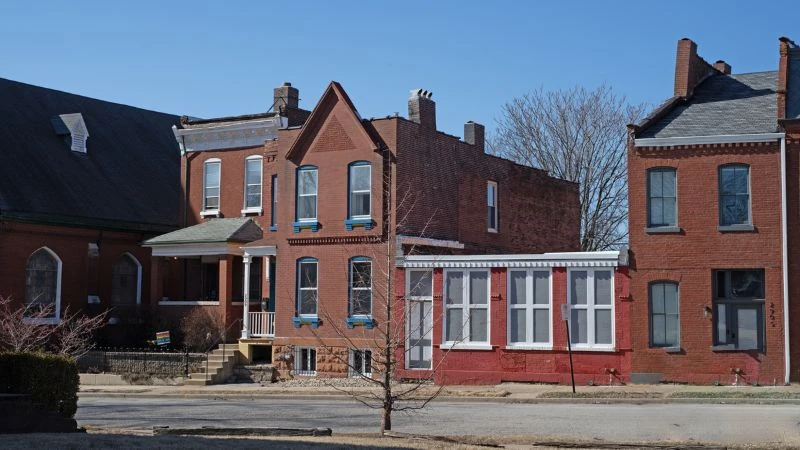
In some of the newer towns further west, you’ll see a wider range of materials like stone and vinyl siding, but you’ll still see quite a lot of brick.
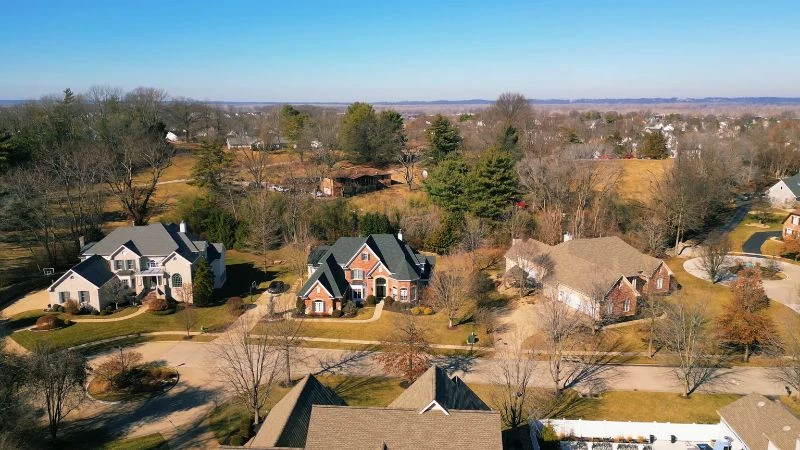
Chesterfield is one good example where everything is newer-built, so you see very little of the typical St. Louis style.
This is especially true in St. Charles County where new construction is around every corner.
St. Louis Was a World-Class City
St. Louis had its heyday in the mid to late 1800s and was the 4th largest US city from 1870 to 1920.
It hosted the World Fair in 1904, drawing 19 million visitors worldwide.

The Decline of St. Louis
St. Louis hit peak population in 1950 with 856,796 residents. By then, it had dropped to the 8th largest city.
The Census Bureau put the City of St. Louis at 278,144 as of July 1, 2025, down from 301,578 in the 2020 census. The metro area, which is the number most people actually mean, is about 2.8 million.
St. Louis fell into decline starting with the Great Depression. By the mid-1950s, many buildings fell into disrepair, and the population started to dwindle.
Many historical buildings were lost, but in the late 1960s to early 1970s, we started to see passionate groups of people trying to preserve and restore some St. Louis neighborhoods.
One great example is Lafayette Square and the painted ladies.
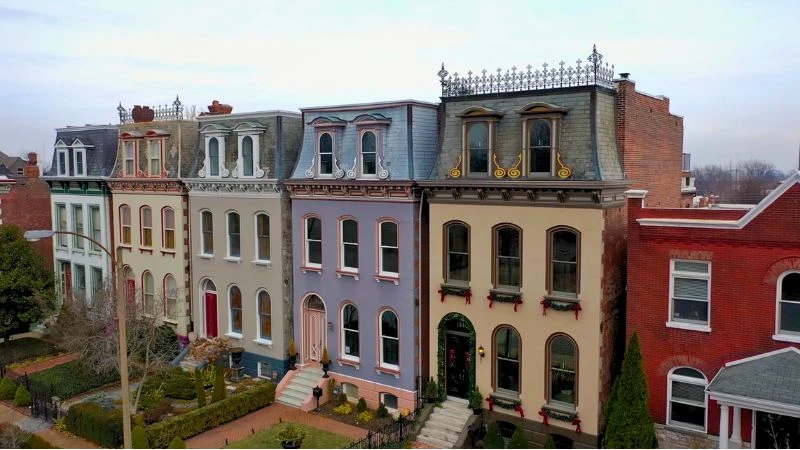
Many neighborhoods are now listed in the National Register of Historic Places and are City Historic Districts.
This preserves their historic charm and protects the buildings from being razed.
There’s a very active Preservation Board that makes decisions on what buildings can be taken down and new developments.
St. Louis City has eight certified local historic districts:
- Soulard
- Hyde Park
- Fox Park
- Compton Hill
- Shaw Neighborhood
- Central West End
- Visitation Park
- Skinker-DeBaliviere-Catlin Tract-Parkview
Helpful Tips: Historic District
- If you’re considering moving into a historic district like Benton Park or Lafayette Square be sure to check out some of the restrictions that apply to them.
- Each neighborhood website is a great place to look for more details.
- Most of the restrictions apply to the front-facing exterior of the buildings.
St. Louis City Neighborhoods
Knowing the different neighborhoods when searching for a home in St. Louis is helpful.
There are 79 neighborhoods in the City of St. Louis, some of which can feel completely different.
Many neighborhoods will share similar looks and layouts. They’re all mostly brick homes, and the streets follow a similar block pattern.
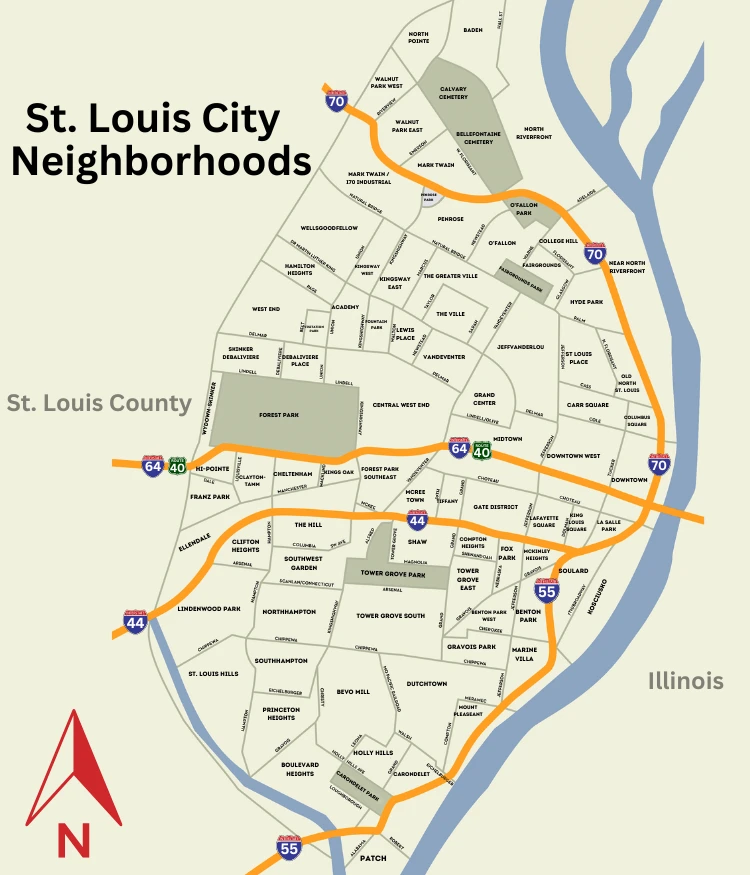
All neighborhoods have a variety of brick homes, multi-family units, apartments, condos, and local businesses.
A big difference to watch out for is how well-maintained the homes are and whether they’ve been restored or redeveloped.
Each neighborhood has pockets of redevelopment mixed in with original homes where little has been done to keep up with the times.
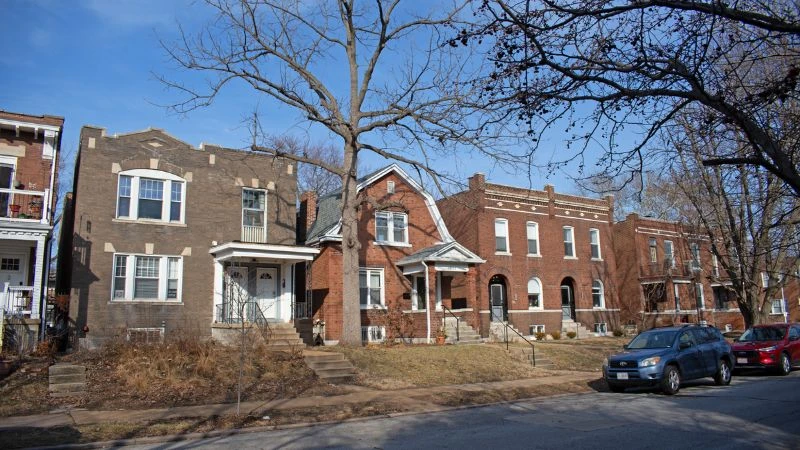
A more useful thing to look at than the street is the house itself: St. Louis brick is structural, so tuckpointing, a sturdy roof and a dry basement are the three things that decide what a century-old city home will cost you after closing. Ask for the age of the roof and the sewer lateral inspection.
Looking at Some City Neighborhoods
Soulard has a reputation for being the party neighborhood.
It’s a popular place to go bar hopping, and they have an annual Mardi Gras celebration and parade.
But don’t let that fool you.
There are quiet areas, too, and beautifully restored homes like the Franz Artz house.
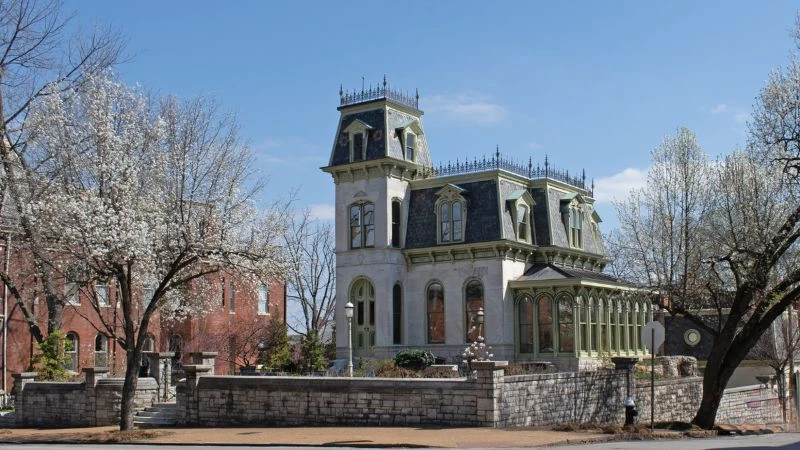
Tower Grove and Tower Grove South are named after Tower Grove Park, which is especially popular on Saturday mornings for its Farmers Market.
It’s also home to the Missouri Botanical Gardens. The neighborhood has a mix of larger single- and multi-family homes; in some areas, you’ll even find some Cape Cods!
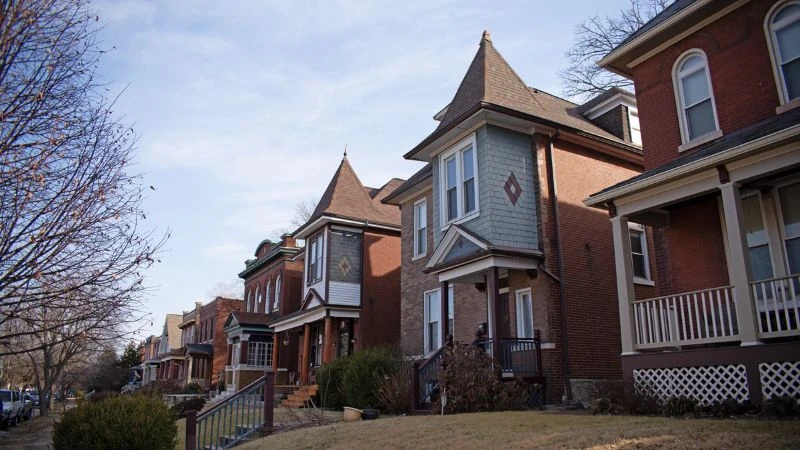
The Hill is St. Louis’ “Little Italy,” founded by Italian immigrants in the early 1800s. The community takes pride in its rich heritage. You can spend a whole afternoon in Italian grocery stores, restaurants, delis, bakeries and cafes without leaving a four-block radius.
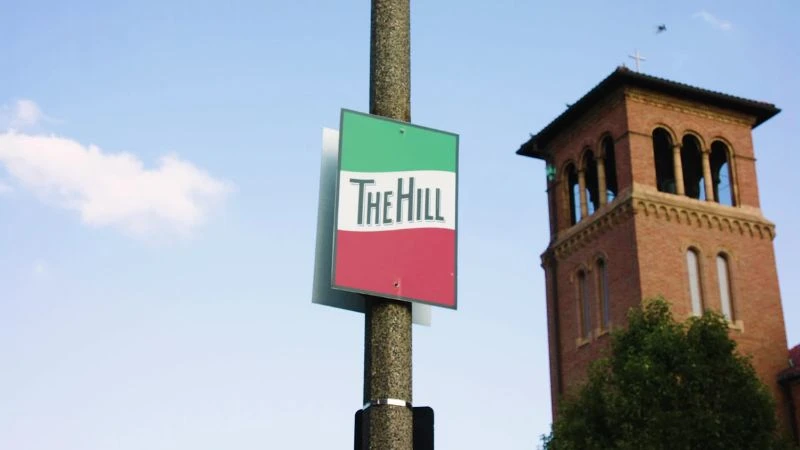
Downtown and Downtown West St. Louis have a lot going on! Over the last two decades, there has been a lot of redevelopment and planning to revitalize the area.
There are loft-style condos, apartments, and mixed-use buildings. The downtown area is popular with newcomers looking for that city experience.
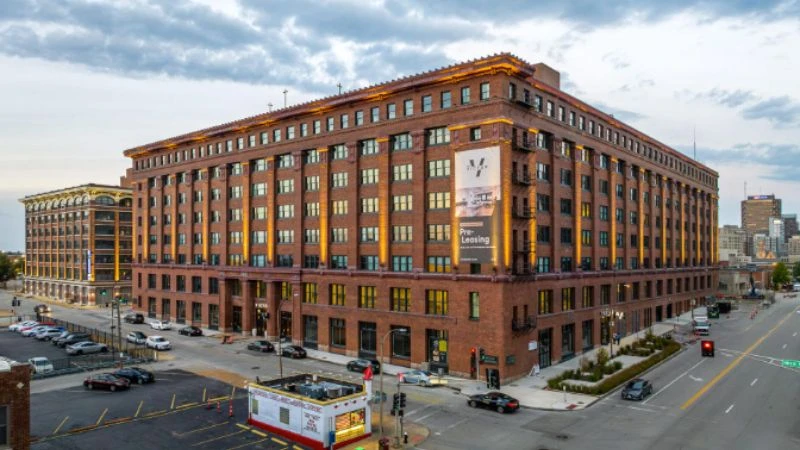
Central West End is across from Forest Park, adjacent to Washington University, and just a five-minute drive from Downtown St. Louis.
The business district is a popular place for an evening out with its restaurants, bars, and entertainment. You’ll find luxury apartments and condos, gated streets with mansions, and beautiful brick homes on tree-lined streets throughout
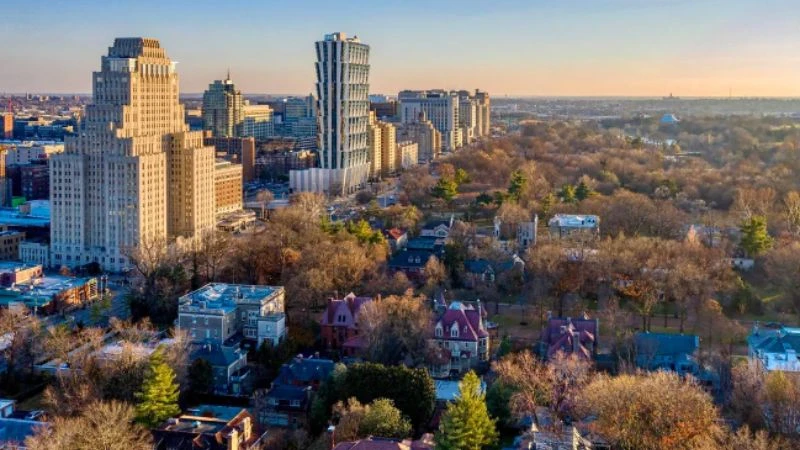
Lafayette Square is known for its Painted Ladies, brightly colored Victorian homes facing Lafayette Park, the oldest park in the city of St. Louis. In addition to the beautiful homes, you’ll find upscale restaurants and bars. Check out Bailey’s Chocolate Bar for a great date night.
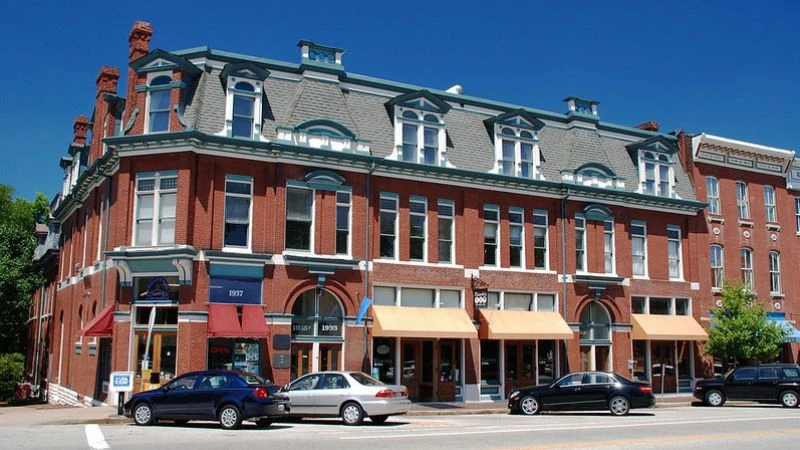
Old North St. Louis is one of the city’s oldest neighborhoods and the site of one of its longest-running restoration efforts. The Old North St. Louis Restoration Group was formed in 1981, and the Crown Square project it went on to lead rehabilitated 27 historic buildings along 14th Street, turning a closed pedestrian mall back into storefronts and apartments. It finished in 2010 and won a HUD Secretary’s Award for Excellence in Historic Preservation the following year.
Worth exploring if you like nineteenth-century brick and want to see what a long restoration looks like in progress rather than finished. Two businesses on that stretch, Crown Candy Kitchen and Marx Hardware, have traded there continuously for over a century.
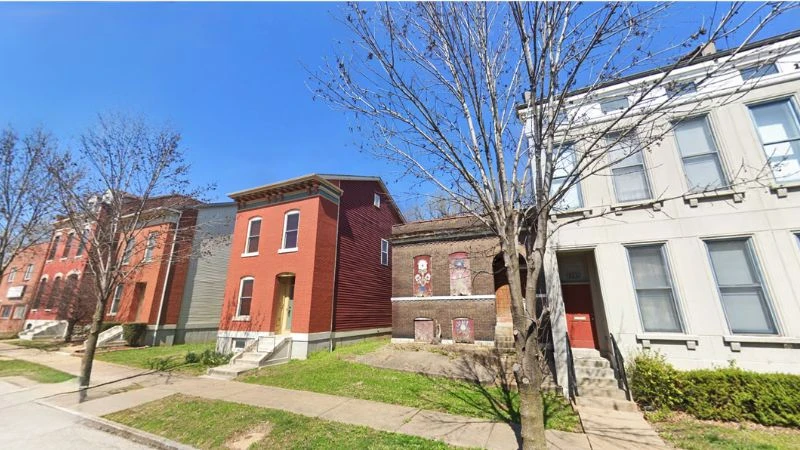
There’s more to explore, be sure to check out our blog for more on St. Louis neighborhoods and suburbs.
That one decision changes your taxes, your school district and your commute. It is the first thing we help people work out.
City Brick, or a Yard Out West?
The Greater St. Louis Areas
You’ll find newer towns with more modern homes as you get further west from the city.
Chesterfield, for example, has many houses built from the 1980s to now, while in Soulard, you’re looking at buildings built in the 1880s.
St. Louis County
Creve Coeur is another place known for its outdoor spaces, Creve Coeur Park is a great place to rent a kayak for the afternoon or go for a walk. It’s also home to many tech companies. The residential areas have ranch-style homes and condos, many on wooded lots.

Chesterfield is about a 30-minute drive from St. Louis City and has a lot going on. The houses are newer than the city, with many “older” homes built in the 1970s to 1990s. There’s a lot of new construction going on, with many options for food, entertainment, and relaxation.

Town and Country is the perfect blend of suburban amenities with a little country living charm. It is an expensive, quiet area with large lots, about 25 minutes from the city.
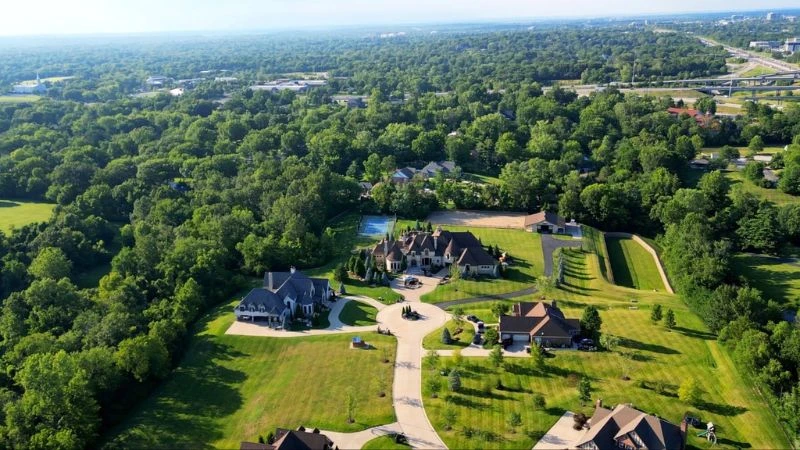
Clayton holds the seat of St. Louis County and is a bustling business center with Fortune 500 companies headquartered here. There are plenty of small shops, upscale to casual restaurants and bars, and residential options from condos to impressive single-family homes. And once a year, they bring us the St. Louis Art Fair bringing artists and visitors from all over the region!
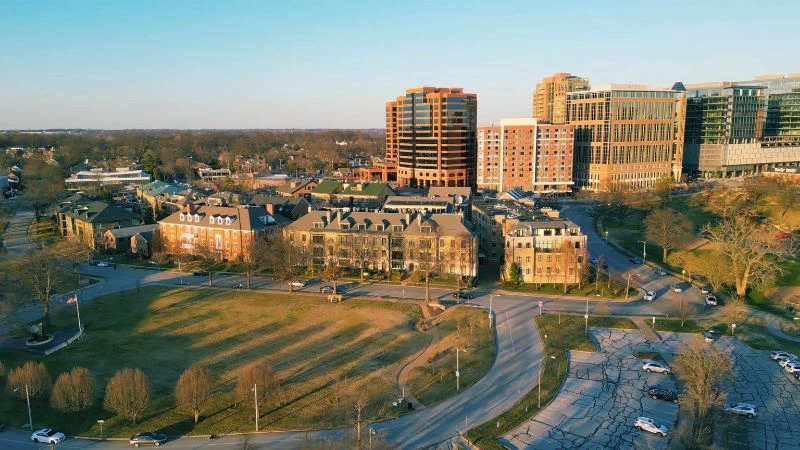
Kirkwood, Maplewood, and Webster Groves are close to the city, and each has a real walkable downtown of its own, with local shops and restaurants. They are inner-ring suburbs built mostly before the war, and they price accordingly.
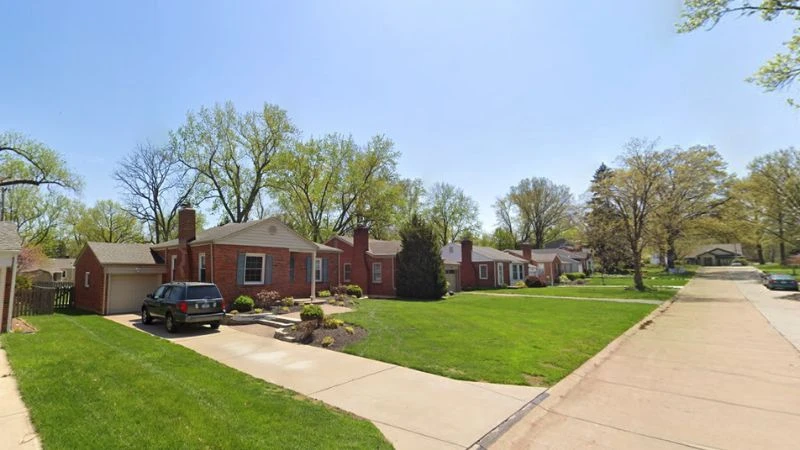
Richmond Heights has a mix of old and new residences, with homes ranging from $200k in price to over $2 million. It’s also close to many shopping options: hardware stores, grocery stores, clothing, pet stores, malls, and Micro Center.
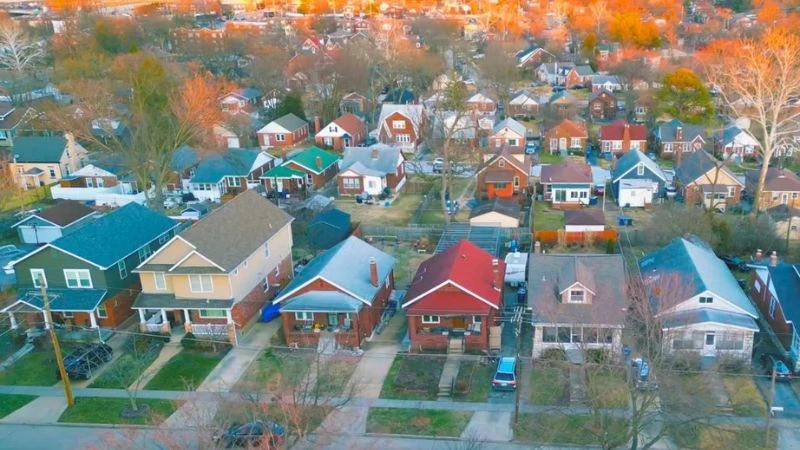
There’s so much more! Check out our blog for even more on St. Louis area neighborhoods!
St. Charles County
Though technically not St. Louis, St. Charles County is a popular destination for people moving to town.
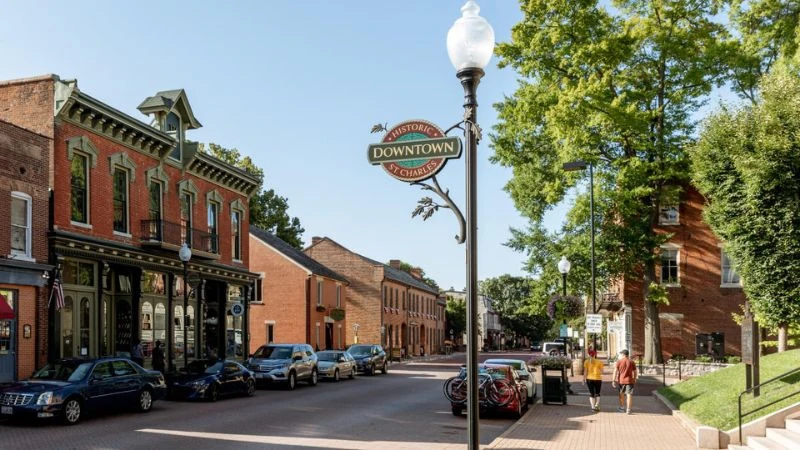
St Charles, in particular, has a brick-paved Main Street running down to the river, lined with shops, restaurants, bars and coffee shops.
Overall, you’ll notice much newer homes in St. Charles County. The whole area has been massively developed in the last 20 years. You’ll see more “cookie-cutter” homes that don’t quite have the same charm as city neighborhoods.
Homes in this area range from midsize affordable homes to condos to homes on the lake. There’s also plenty of outdoor space to enjoy and hiking trails!
O’Fallon is the largest city in St. Charles County and one of the fastest-growing in the metro. It has the shopping, dining and entertainment of a small city of its own, and more new construction than anywhere else on this list. We have a full guide to moving to O’Fallon if it is on your shortlist.
 9 minutes, 3 secondsLiving St. Louis
Things To Do Around St. Louis
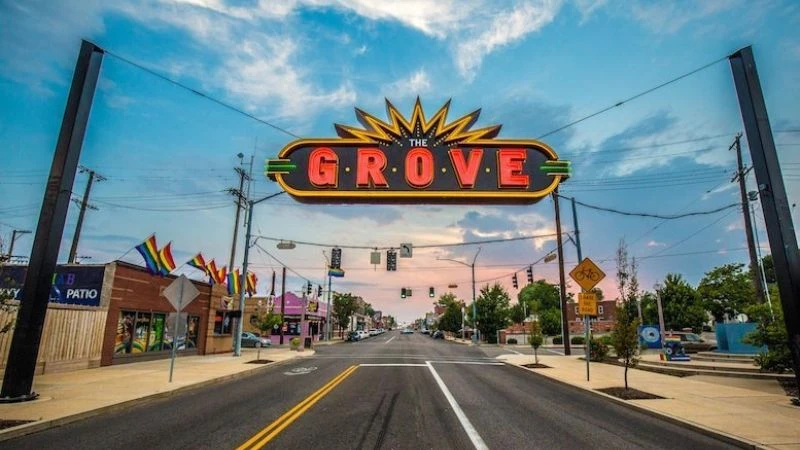
The Grove is the business district of the Forest Park Southeast neighborhood, located along Manchester Rd.
A significant number of the businesses are LGBT-oriented, and there is a run of bars, restaurants and clubs along it, including Urban Chestnut Bierhall. It’s a great place for drinks with friends or a night out on the town.
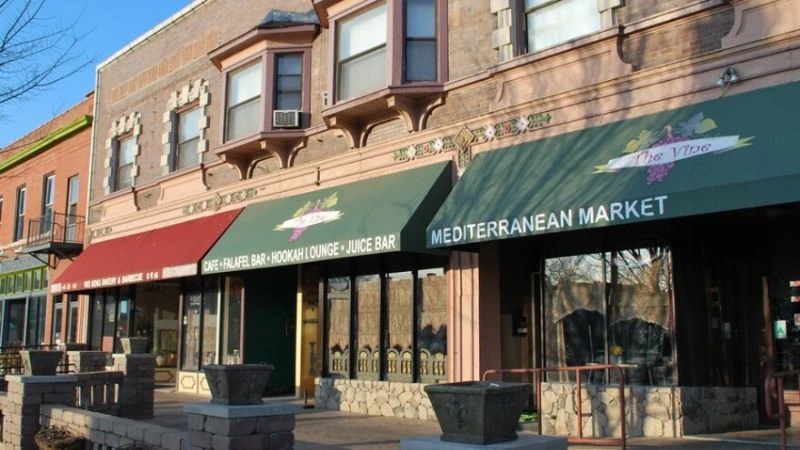
South Grand Blvd sits on the edge of the Tower Grove South neighborhood and is primarily known for its international cuisine. You can find Jay’s International grocer, Thai food, Vietnamese, Chinese, Indian, fusion and more.
There are also amenities like banks, medical, coffee shops, and dry cleaners. There’s a lot to choose from on this strip, and its proximity to Tower Grove makes it a great place to grab some food and picnic at one of the park’s many decorative pavilions.
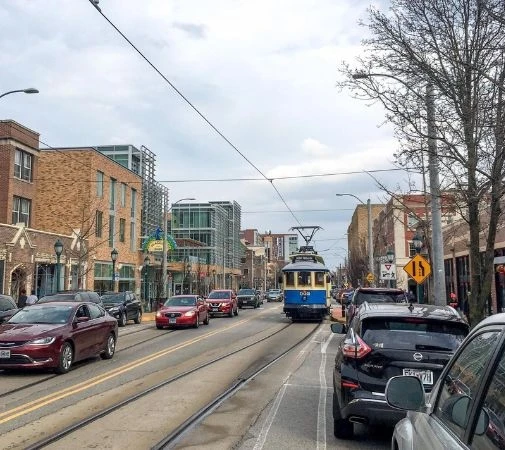
The Delmar Loop is an entertainment hub in University City. It features a bowling alley, an eclectic mix of restaurants and cafes, clothing shops (new and vintage), music venues, and cocktail lounges.
The St. Louis Walk of Fame, with stars laid on the sidewalk, features Maya Angelou, Chuck Berry, and Betty Grable. The Loop also features several festivals throughout the year.
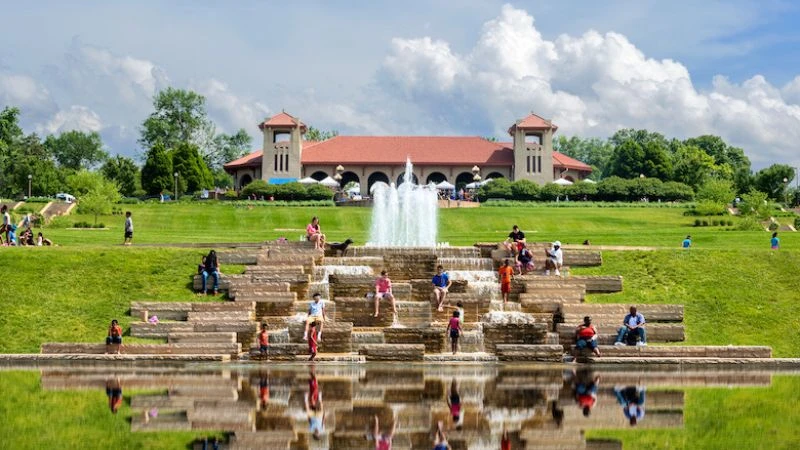
Forest Park borders several neighborhoods, including the Central West End, Hi-Pointe, Skinker-DeBaliviere and DeMun.
At about 1,300 acres, it is one of the largest urban parks in the country, and almost everything in it is free: the Saint Louis Art Museum, the Missouri History Museum, the Saint Louis Zoo and the St. Louis Science Center all cost nothing to walk into. The Muny, Forest Park Golf Course, the boathouse and the World’s Fair Pavilion are there too.
Sports in St. Louis
Sports fans will love the sports scene here.
St. Louis has three major sports teams:
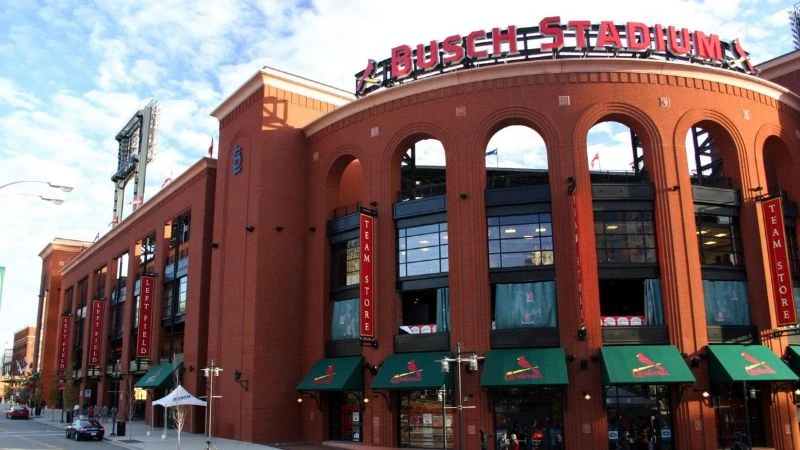
The St. Louis Cardinals play at Busch Stadium Downtown and have won 11 World Series.
The St. Louis Blues are the city’s hockey team, who play at Enterprise Center and won the Stanley Cup in 2019.
St. Louis City SC is the city’s Major League Soccer (MLS) franchise, and they play at CityPark in Downtown West.
St. Louis is a baseball town first, but the Blues sell out, and City SC filled a new stadium in Downtown West from its first season.
Union Station is in Downtown West and houses the St. Louis Aquarium, a Ferris Wheel, mini golf, and a variety of restaurants perfect for a day out with the family.
City Museum is internationally known and definitely something everyone should experience at least once! At this weirdly wonderful place, you can climb and play through a unique installation of slides, sculptures, and oddities. It’s one of the best places to bring the kiddos if you need to wear them out for the day!

Grand Center Arts District is near Midtown and Central West End. If you’re into art, this is the place for you.
They have theaters, galleries, music venues, and events like First Fridays. The Fabulous Fox Theater hosts world-class shows, and The Angad Arts Hotel has a rotating schedule of art shows and a rooftop bar.
Dark Room at the Grandel has Jazz concerts and touring singer-songwriters gracing their stage. The Contemporary Art Museum has art-centric events every month.

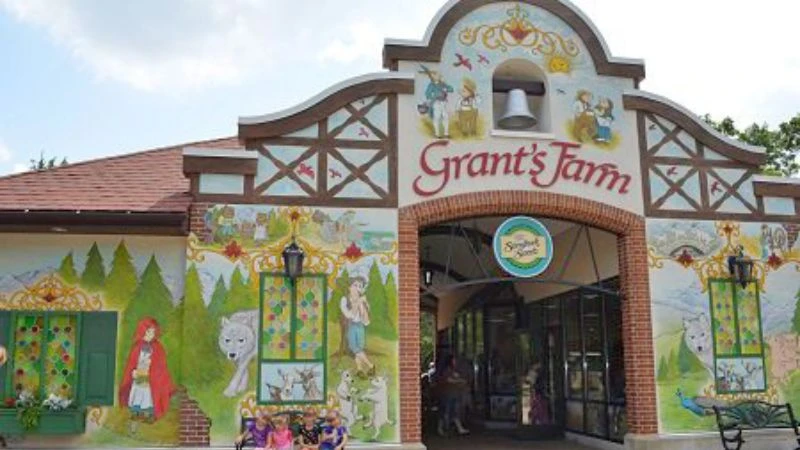
Grants Farm is a historic farm in Southwest St. Louis County.
It was built by Ulysses S. Grant and housed various members of the Busch Family. A cute little train takes you through the grounds, where you can view many animals.
The train stops at a small touristy village with a gift shop, snacks, and smaller animals like exotic birds. It’s also one of the homes of the Anheuser-Busch Clydesdales.
The Gateway to the West
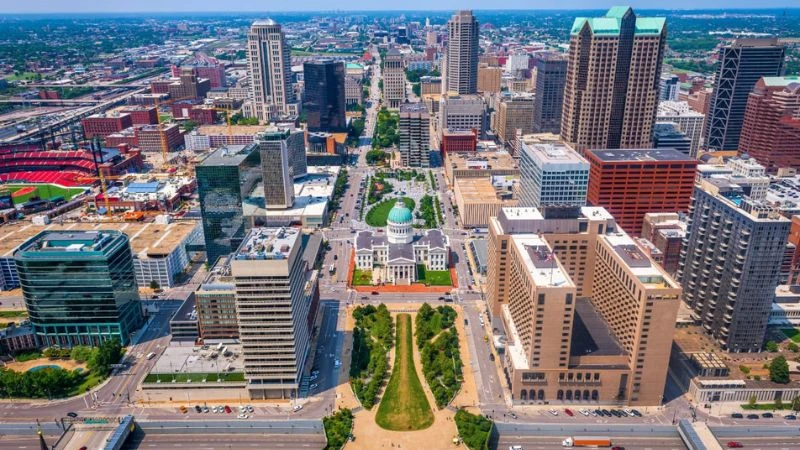
Most people are familiar with the St. Louis Arch, often called the ‘Gateway to the West.

You can go up in the arch and get an amazing view of Missouri and Illinois.
You can feel it move slightly while you’re up there, but it’s not bad.
If you’re afraid of heights but your loved ones really want to go, do not fear! There’s an amazing history museum under the arch and facts posted everywhere about its construction.
The Gateway Arch National Park (where the arch is) is beautiful, with tree-lined paths, a picturesque staircase that leads down to the river, and a lake.
You can also take a riverboat cruise on the Mississippi.
There’s a lot going on in the Lou! Check out city guides like Explore St. Louis or RFT events for more information on events, festivals, and things to do.
St. Louis Culture: Provel, Schucks, and Crazy Driving
…but the driving wasn’t always crazy
Local Cuisine
St. Louis has some cuisine that is 100% St. Louisian, including St. Louis style pizza.
The identifying characteristic of St. Louis Style pizza? Provel Cheese.
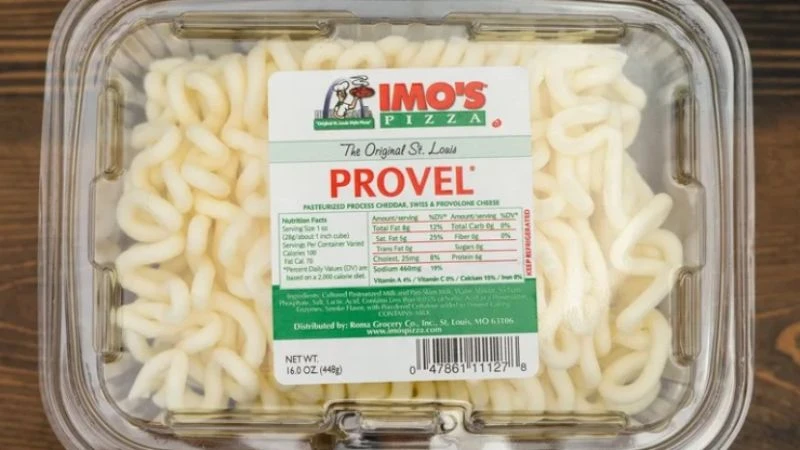
Provel cheese is pretty polarizing here. Some people swear it makes “next-level” pizza, while others consider it a crime in the world of cuisine.
Provel is a processed cheese made of cheddar, swiss, and provolone. You should definitely try it at least once. Imo’s Pizza is the go-to for St. Louis-style pizza.
Gooey Butter Cake
Gooey Butter Cake is another local St. Louis favorite. You’ll find it in most cafés, coffee shops, grocery stores, and some restaurants and bakeries.

St. Louis BBQ
If you like BBQ, you’re in luck! There are some fantastic local places like Sugar Fire and Salt and Smoke. St. Louis-style BBQ is sweet and sticky.
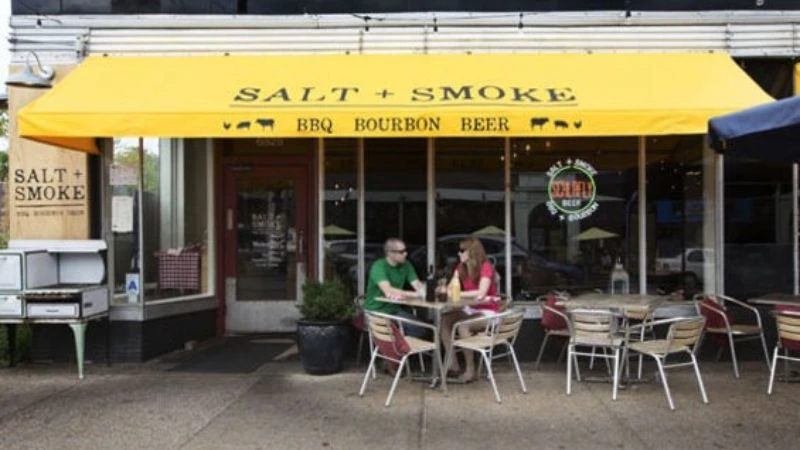
Most BBQ places have a few different sauce styles, ranging from sticky and sweet to thin and mustardy.
“Where’d You Go to High School?”
As you start to meet people you’ll pick up that most people in St. Louis are from here.
An inside joke (that actually happens) is people will ask you “What high school did you go to?”
If you just say “I’m not from here,” they shrug it off pretty quickly.
Helpful tips
- Because everyone knows each other from forever ago, the St. Louis scene can feel cliquish and hard to break into.
- Most people here are pretty friendly, and if you can make a habit of showing up at some key places on a regular basis, you’ll be treated like a regular in no time.
- There are lots of social groups for just about anything: gardening, writing, conversation, architecture, music, kickball, hiking etc.
- Check out Meetup or look for Facebook groups that share your interests.
Local Stores
The common local grocery store around town is Schnucks, and it is the default almost everywhere.
Dierbergs is considered a little more upscale, and you won’t find them in every neighborhood.

Another really special store is Menards! It’s a Midwestern chain, like Ace Hardware, combined with Lowes’s seasonal section and the drugstore’s novelty aisle. Some locations have a piano player and fresh kettle corn for sale on weekends.
They have just about everything a hardware store would have and more:
- Groceries
- Working/hunting clothes
- Greeting cards
- A lighting section you can see from a mile away
- Lumber
- Home supplies
Historic Catholic Churches
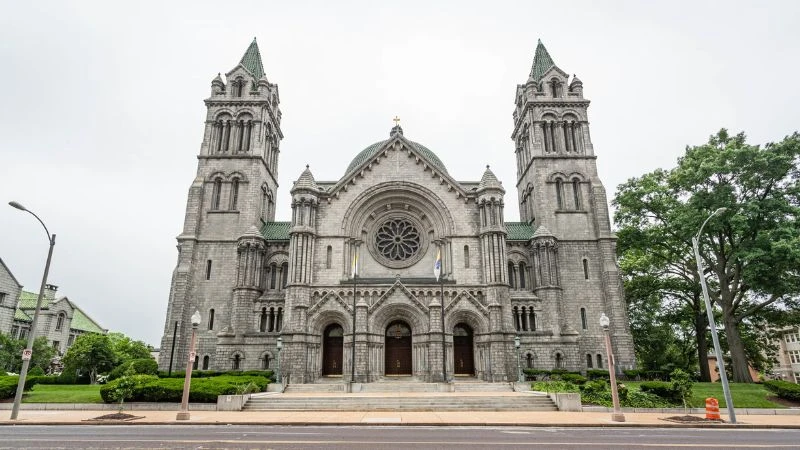
Catholicism is pretty big here, and there are several beautiful historic churches. The most famous is The Cathedral Basilica of Saint Louis in Central West End.
Even if you’re not a churchgoer, it is an amazing site to visit.
During Lent, you can travel to the different fish fries on Friday nights, but be sure to get there early as many of them sell out or shut down by 8:00.
Be sure to check out The St. Louis Post Dispatch, as they will print a list of the Fish Fries with a map every year.
The St. Louis Bar Scene
There’s A LOT of bars around St. Louis. They range from dive bars like The Haunt to upscale cocktail bars like Idol Wolf to loungy like Pagan Wine Bar to more niche places like Fortune Teller Bar or Tim’s Chrome Bar.
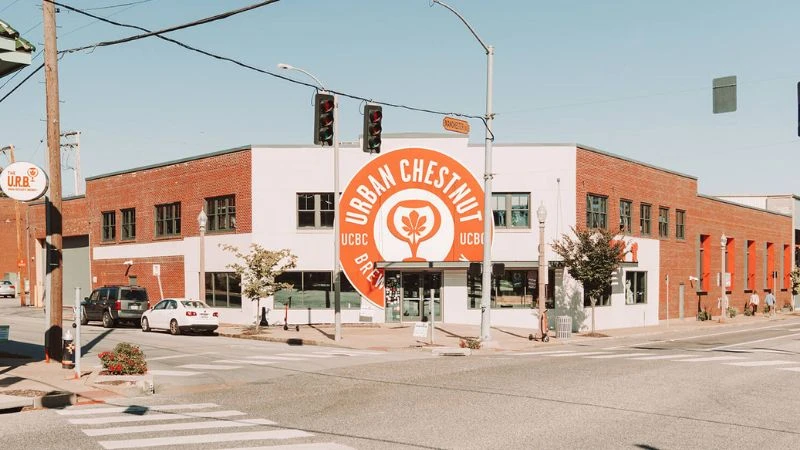
There’s also a lot of great local beer, like Urban Chestnut, 4 Hands Brewing, Civil Life, and Alpha Brewing.
If you’re into that scene it’s a fun way to explore the different areas in town, of course- always do so responsibly.
The Great Outdoors
What surprises some newcomers to the area is the amount of amazing parks and hiking trails.
Especially if you come in from the East, which is flat for miles and miles, it’s hard to imagine that the St. Louis area has a lot of options for hiking, camping, and boating.
But the further west you go, you’ll notice the landscape gets more hilly, with more options for hiking trails and state parks.

And there’s even more available if you’re looking for a day trip, the Ozarks, Onondaga Cave State Park, Crystal City Underground, Castlewood State Park, and more.
Traffic and Driving Around STL
Traffic is mild most of the time around St. Louis.
It’s nothing compared to cities like Atlanta, LA, and New York. Getting around is pretty easy, considering St. Louis is a very spread-out metro area.
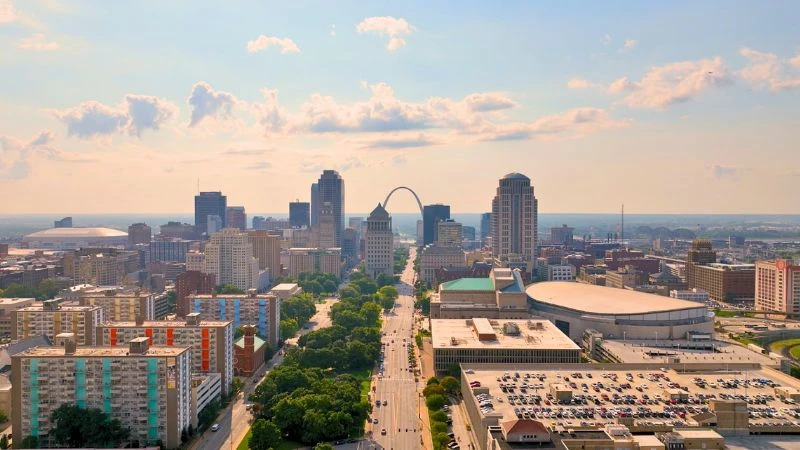
When you’re in the city, driving can be a little crazy.
Some drivers consider red lights a mere suggestion.
U-turns can happen anywhere.
And turning left from the right lane (or vice versa) is pretty commonplace.
Long-time St. Louis residents say it wasn’t always this way, but acknowledge it’s a little nuts. Just make sure you always check before pulling ahead, even if you have the green light, and you’ll be okay.
Defensive driving is a great skill to have here.
What a Commute Actually Costs You
"Twenty minutes from everything" is the thing St. Louisans say and it is broadly true, but it is worth seeing the real numbers before you pick a suburb. These are morning rush-hour drives, measured on a Tuesday in July 2026:
| From | To Downtown | To Clayton |
|---|---|---|
| Hazelwood | 24 min | 20 min |
| Chesterfield | 30 min | 24 min |
| Arnold | 30 min | — |
| O’Fallon, MO | 45 min | 40 min |
| Festus | 50 min | — |
| Wentzville | 55 min | 50 min |
| Belleville, IL | 25 min | — |
Source: Google Maps, departing 7:30am Tuesday 8 July 2026, gathered for our Living St. Louis map tour.
The number that surprises people is how little rush hour costs. O’Fallon to Downtown is 45 minutes at 7:30am and 40 minutes at 11am, a difference of five minutes, because I-70 carries freight all day rather than just at peak. What does move the number is the Missouri River. Anything in St. Charles County puts a bridge between you and a Downtown or Clayton office, and a bad morning on that bridge has no alternative route.
St. Louis Housing and Cost of Living
The affordable cost of living is what keeps a lot of people here, and it is the first thing on any honest list of the pros and cons of living here.
Housing is where the metro genuinely undercuts the country, and the size of the gap depends entirely on which side of the county line you land on:
| Where | Median price | YoY | Days |
|---|---|---|---|
| St. Louis City | $237,803 | −3.8% | 21 |
| St. Louis County | $324,050 | +8.2% | 13 |
| St. Charles County | $383,874 | +5.2% | 12 |
| United States | $407,730 | +3.2% | 49 |
Source: Redfin, all home types, for the three months ending July 2026. Read 2026-09-08. “YoY” is the change against the same period last year; “Days” is the median days a home spent on the market.
Two things in that table are worth more than the headline. The first is that the whole metro sits under the national median while the country sits at $407,730.
The second is the days-on-market column: homes here go under contract in roughly two weeks against 49 days nationally. St. Louis is affordable and it is fast, which is a combination people are usually not braced for.
Above the median there is a lot of range. A restored city home and a new build in St. Charles County can cost the same money and are not remotely the same purchase.
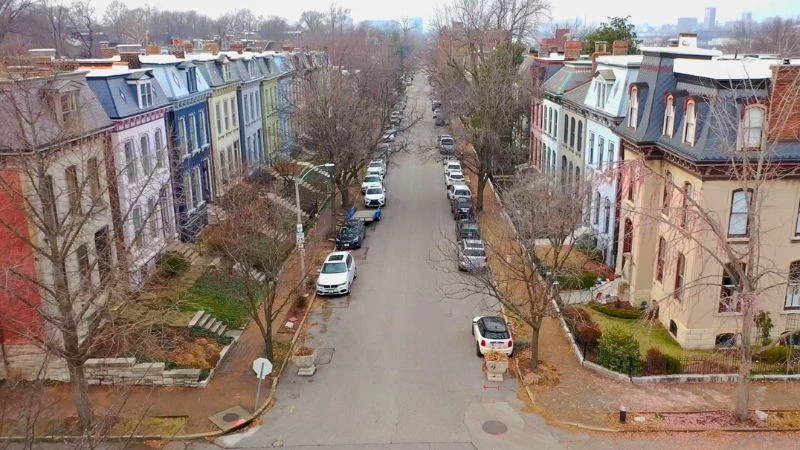
With many quality homes available and a healthy real estate market, finding a new home is possible in St. Louis.
St. Louis Schools
The school systems in the western parts of St. Louis tend to rank higher than the St. Louis City schools, with Ladue and Clayton high schools ranking the highest for public schools, according to Niche.com.
And there are dozens of private schools to choose from.
For colleges, the largest public university in the area is the University of Missouri–St. Louis (UMSL), on the northwest edge of the county. There is also Harris-Stowe State University in midtown, plus St. Louis Community College and St. Charles Community College.
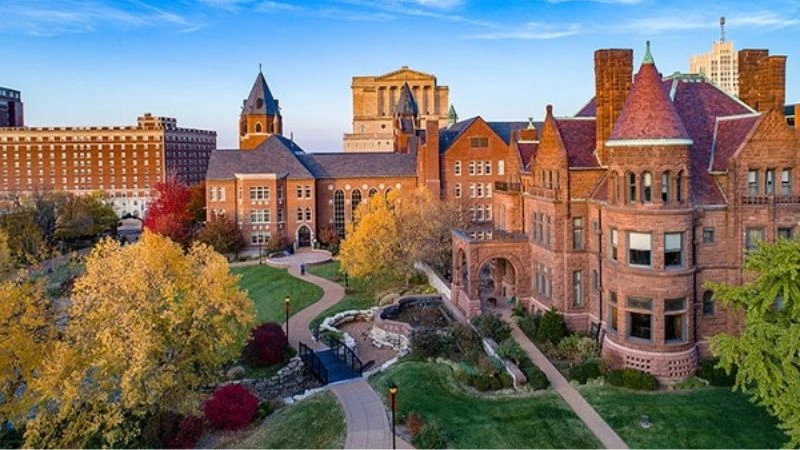
The private universities are Saint Louis University (SLU), which has a well-known School of Medicine, Webster University, and Washington University in St. Louis. There are also several smaller universities like Lindenwood University, and Logan University.
Some Downsides of Living in St. Louis
St. Louis can sometimes feel like a small town with its declining population, distance from major cities and everyone seems to know everyone.
 14 minutes, 19 secondsLiving St. Louis
Crime is frequently cited as a concern in St. Louis. City residents often acknowledge the presence of crime but emphasize that it predominantly consists of property crimes. Despite this, most city residents report feeling safe and advise others to “be smart and aware.”
Locals will also attribute the high crime rate to skewed statistics because the numbers are counted by the St. Louis City population instead of the metro area.
If you want real numbers for a specific address rather than a metro average, the FBI Crime Data Explorer and the St. Louis Metropolitan Police Department both publish their own. Look up the blocks you are actually considering. No regional figure will tell you anything useful about one street.
Personal property tax is a thing in St. Louis that you pay every year. You have to declare any cars, trucks, RVs, boats, recreational vehicles, motorcycles, tractors, or business property.
For a list of ‘Personal Property’ and the cost breakdown, go to the government site.
The St. Louis Relocation Guide
Our free interactive guide to the metro, built for people planning a move from out of state.
Your First 30 Days: The Paperwork
This is the part nobody warns you about, and the part with actual deadlines attached. Two of these have caught out clients of ours who did everything else right.
You Have 30 Days to Title Your Car
Missouri gives you 30 days from the date you become a resident to title your vehicle, and you cannot do it until you have been to the assessor. That part is the trap. The part that stops people is what the state asks you to bring: alongside the out-of-state title, an insurance card and a VIN-and-odometer inspection, you need proof of tax compliance: either a paid personal property tax receipt or a statement of non-assessment from your county of residence, or from the City of St. Louis.
A brand-new resident has neither, by definition. So the real first step is the assessor's office, not the license office, and doing it in the wrong order costs you a second trip. Some vehicles also need a safety inspection, and an emissions inspection applies in part of this metro; the Missouri Department of Revenue is the authority on which apply to you.
In the City, a Home Is Inspected Before Anyone Lives In It
The City of St. Louis requires a Residential Occupancy Permit, which comes out of a Housing Conservation Inspection. The city's own wording is blunt: units must be inspected before they are occupied. It is a basic code inspection, the certificate lasts twelve months, and you apply through the city's permit office or online.
Unincorporated St. Louis County has its own version, required on rentals since 2005 and on homes being sold since 2007.
And here is where this article's whole point about invisible lines stops being an observation and starts costing you a weekend. The county's own guidance says residents of municipalities should contact their respective municipal officials for occupancy requirements, if any. There are dozens of municipalities in St. Louis County. Some inspect, some do not, and the county cannot tell you which is which for your address.
“Which municipality is this address in, and does that municipality require an occupancy inspection?” It is one question, the answer changes your closing timeline, and it is not on any listing sheet. Any agent working this market should be able to answer it for a specific address without looking it up.
The rest of the list
Less dramatic, and worth doing in roughly this order:
- Missouri driver license. Sort it alongside the vehicle title; the same office handles both.
- Declare your personal property with your county assessor. You are billed annually on cars, trucks, boats, motorcycles and trailers, and the bill lands at the end of the year.
- Utilities. Ameren Missouri for electric across the metro; Spire for gas. Water is municipal, so it depends on which of those invisible lines you landed inside.
- Voter registration. Through your county election authority, or the City of St. Louis Board of Election Commissioners if you are in the city.
- Change of address with USPS, and separately with your bank and insurer. Your insurance premium will change; Missouri rates are not the rates you are leaving.
Common Questions
Is St. Louis a cheap place to live?
On housing, genuinely yes. The median sale price is $237,803 in the city, $324,050 in St. Louis County and $383,874 in St. Charles County, against $407,730 nationally, all for the three months ending July 2026. Where it is less of a bargain is the things you do not choose: insurance, utilities, and the fact that almost everyone drives everywhere.
What is the difference between St. Louis City and St. Louis County?
They are two separate governments, and the city is not in the county. Different school districts, different police, different taxes. The city has a 1% earnings tax and the county has none. It is the single most consequential thing to understand before you start looking, and it is covered in full above.
How long is the commute?
Shorter than you are expecting. Hazelwood to Downtown is 24 minutes at 7:30am, Chesterfield 30, O'Fallon 45. Rush hour costs less here than almost anywhere comparable: O'Fallon to Downtown is only five minutes quicker at 11am. The variable that does bite is the Missouri River: anything in St. Charles County puts a bridge between you and a Downtown or Clayton office.
How safe is it?
That question has no honest citywide answer, and we are not going to give you one. The FBI Crime Data Explorer and the St. Louis Metropolitan Police Department both publish their own data down to a level that is actually useful. Look up the specific blocks you are considering. One thing worth knowing when you read a headline: the City of St. Louis is its own county, so a per-capita city rate is computed on about 278,000 people rather than on the 2.8 million in the metro.
Do I need a car?
Almost certainly. MetroLink runs 38 stations across 46 miles and MetroBus more than 50 routes, which is real coverage in the central corridor and thin everywhere else. It is possible to live here without a car in a few neighborhoods and impractical in most.
What is there to do?
More than the size of the city suggests, and a lot of it is free. Forest Park alone gives you the Saint Louis Zoo, the Saint Louis Art Museum, the Missouri History Museum and the Science Center at no charge. There is a full section on it above.
Thinking of Moving to St. Louis?
If you’re thinking about moving to the Midwest, St. Louis has a lot to offer:
- A thriving art scene
- A healthy job market
- Great entertainment
- Beautiful outdoor spaces
- Professional sports teams
- Dozens of types of neighborhoods to call home
If you’re moving to St. Louis and looking for help buying your new home, explore our St. Louis relocation services. We’d love to help you make your move to the Lou and share our local expertise.
We work across all three counties in this guide, and most of what we do for people relocating happens before they ever fly in: narrowing the map, checking drive times against a real office address, and telling them which of the trade-offs above they will actually notice.
We’re Excited to Work With You!
Someone from our team will reach out within one business day.