

If you need to sell and buy a house at the same time, it can be tricky, and the right strategy depends on your situation. There are three main ways to do it:
- Buy first, without a contingency
- Buy contingent on selling your current home
- Sell first, then buy
Most people start out hoping for the perfect version, where both homes close on the same day and you move once. It happens. But plans change along the way, so to have a smooth transaction, go in with a backup already lined up, and a backup for the backup.
When sellers tell us they need to sell and buy, two questions come up almost every time.
The money
Where does the down payment come from, and do we need the equity in our current house to buy the next one?
The logistics
How do you actually move out of one house and into another, and what happens on closing day?
This guide answers both, step by step, the way we walk our own clients at Gateway Realty Group through it.
Your Options for Selling and Buying at the Same Time
Every plan starts with one question: can you buy your next home without your current one selling first? That decides which of three approaches fits.
| Approach | When it fits | What to watch for |
|---|---|---|
| Buy first, without a contingencyYou close on your next home before your current one sells. | You can qualify for both mortgages, and you have the down payment or one of the tools below. | You carry two house payments until your current home closes. |
| Buy contingent on your saleYour purchase only goes through if your current home closes. | The home you want has been on the market a while, or the seller is flexible. | Sellers rarely accept one on a new, competitive listing. |
| Sell first, then buyYou close on your current home, then buy with your equity in hand. | You need your equity to buy, or you can’t qualify for both mortgages. | You need somewhere to live between closings, and it can mean moving twice. |
Most buyers with a house to sell want to avoid a contingency, because a non-contingent offer is much stronger. These are the ways to do it:
| Option | How it helps | What to watch for |
|---|---|---|
| Cash or savings for the down payment | You qualify for both mortgages and don’t need your equity to buy. | Two house payments until your current home closes. |
| Minimum down, then a recast | Buy with the minimum down payment, then put your sale proceeds toward the loan to lower the payment. | Your lender has to offer recasts, and you still qualify for both mortgages. |
| Home equity line of credit (HELOC) | Borrow against your current home for the down payment. | Open it before you list your home. |
| Family gift, 401(k) loan or investment loan | Covers the down payment without touching your home’s equity. | Each has its own rules, so check them before you count on it. |
| Bridge loan | A short-term loan against your current home’s equity. | Higher fees, so it’s usually the last resort. |
| Sell first with a rent-back | You sell first and stay in your home after closing while you buy. | Most buyers want to move in, so rent-backs are short. |
Whichever approach you take, the two closings can happen on the same day or be staggered. The timing section below covers both.
Start With the Lender: Can You Buy Before You Sell?
The first call is to a lender, before you tour a single house. Whether you can buy before you sell depends on your full financial picture, and every client’s is different.
There are two reasons people have to sell first:
-
They can’t qualify for the price they want yet
Maybe you qualify for $500,000 while you still own your current home, but you could qualify for $800,000 once it sells. If the house you want is closer to the second number, you’ll need to sell first.
-
They need the equity for the down payment
Plenty of homeowners can qualify for both mortgages but don’t have the 5% to 20% they’d like to put down sitting in savings. Their down payment is tied up in the house they live in.
To buy first, a lender has to approve you for both mortgages at once, the one you have and the one you’re about to take on. That comes down to your debt-to-income ratio, your income measured against all your monthly debt payments, including both house payments.
If you can carry both, nothing hinges on your current house selling, and you have the most options. If you can’t, the plan starts with selling, and the rest of this guide shows you how to bridge the time between your two closings.
We work closely with Stuart Rosenblum at American Mortgage Corporation, one of the best mortgage lenders in St. Louis. He can tell you whether you can buy before you sell, how much you’d need down, and whether a recast is an option on your loan.

Mortgage Banker · American Mortgage Corporation
NMLS: Stuart Rosenblum #267567 · American Mortgage Corporation #226715
- Fast communication
- Decades of experience
- Personalized guidance
Buying First, Then Selling
Buying first is the smoothest way to do this when your finances allow it. You can make an offer with no home sale contingency, which makes you a much stronger buyer, and you can move on your own schedule instead of cramming everything into closing day.
If You Don’t Need the Equity From Your Sale
If you can qualify for both homes and cover the down payment without your equity, the usual choice is to close on the house you’re buying first, then close on the house you’re selling afterward.
Close on your new home
You get the keys first.
Close on your old home
It’s already empty.
That gap gives you time to move without paying for storage or a second move. It also changes when you list.
When should you put your old home on the market?
After you move out
The least stressful option. You don’t have to keep a house show-ready while you live in it, or leave for every showing.
While you still live there
If you want to close on your current home soon after buying, it goes on the market while you still live there. You keep it clean for showings and leave for each one. It’s easier with a well-furnished home that can go on the market as it is.
Which one makes sense comes down to your goals and your timeline. Either way, budget for owning both homes for longer than you plan to.
Until your old home closes, you pay the carrying costs on both homes:
- Mortgage
- Property taxes
- Insurance
- Utilities
- Upkeep
- HOA dues
Plus closing costs on both the sale and the purchase.
If You Need Your Equity: Buy With the Minimum Down, Then Recast
Recasting is like making a second, larger down payment after you’ve closed. You put a lump sum toward your mortgage, and your lender lowers your monthly payment without changing your loan’s terms or interest rate.

Buy your new home With as little as 5% down

Your old home sells You get your equity


Equity goes to your loan
Your lender recasts the loan Lower balance, lower monthly payment
Same rate and term
This is the route a lot of our buyers take when they can qualify for both mortgages but their down payment is tied up in the house they own. It lets them make a stronger offer without a home sale contingency, especially in multiple offers.
Bars 1 to 3 show your loan balance. Step 4 shows your payment.
After you buy
You put 5% down on a $500,000 home.
Your old home sells
You put $150,000 of your proceeds toward the loan.
After the recast
Same loan, rate, and term. Your monthly payment is recalculated on the smaller balance.
Your monthly payment
Monthly principal and interest on a 30-year loan at an example 6.5% rate.
-
Buy with the minimum down
Often 5% on a conventional loan, and sometimes less, depending on what you qualify for.
-
Move in, then sell your old home
For a short time you have two mortgages, one on each house.
-
Put your proceeds toward the new loan
Your old mortgage is paid off at closing, and you can apply what you net to the new one.
-
Your payment is recalculated
Same loan, same interest rate, and a lower monthly payment based on the new balance.
A recast isn’t a refinance. There’s no new loan, and your rate doesn’t change. It turns what would have been a contingent offer into a non-contingent one, so you can compete for the house you want.
The catch is that you have to qualify for both mortgages. You don’t have to put all your proceeds back into the house, either; some people keep part of it for projects or savings. Recasting isn’t only for home sales. If you receive a gift or another lump sum after you close, a recast can lower your payment because the money goes straight to principal.
Other Ways to Cover the Down Payment
If you don’t have the minimum down payment in savings, these are the options we see used most, from the most common to the last resort:
- A home equity line of credit (HELOC). A HELOC borrows against your current home. Open it before you list, because lenders generally won’t open one on a house that’s already for sale.
- A gift from family. Your lender will want it documented as a gift.
- A loan from your 401(k). Every plan has its own rules and repayment terms, so read yours before you rely on it. The IRS explains how retirement plan loans work.
- A loan against your investments. Some brokerages lend against a stock portfolio, which avoids selling investments and the taxes that can come with it. Ask your advisor about the rate and the terms.
- A bridge loan. A short-term loan against your current home’s equity. It still requires you to qualify for both homes, and the fees are higher, so it’s usually the last resort. Our lender guide explains how bridge loans work with one of the lenders we trust.
 21 minutes, 13 seconds
 Living St. Louis
In this video, our team and mortgage banker Stuart Rosenblum walk through buying before you sell: the two kinds of home sale contingency, how a recast works, where a down payment can come from, and when to list your current home.
Not sure if you can buy before you sell?
We’ll Map Out Your Options.
Buying With a Home Sale Contingency
A home sale contingency makes your purchase depend on your current home selling. If your current home doesn’t close, you’re not on the hook to buy the new one. That protection is real, but it makes your offer weaker, so we usually look for a way to buy without one first.
It’s also the hardest to get accepted on a competitive house, because the seller has to wait on your sale, and if your home doesn’t close, their sale falls through too.
Your current home doesn’t close
With a home sale contingency
You can walk away from the house you’re buying, usually with your earnest money returned.
Without one
You’re still committed to buying the next house, whether or not your old one sells.
The Two Kinds of Home Sale Contingency
| Type | Where your house is | How sellers see it |
|---|---|---|
| Contingent on sale and closing | Not under contract yet, or not even listed | The biggest risk to them, and a small chance of acceptance |
| Contingent on closing only | Already under contract with a buyer | Easier to accept, as long as your buyer looks solid |
When we represent a seller and a contingent offer comes in, we look hard at the buyer’s house. Is it priced to sell quickly? Is it in good shape, so an inspection is unlikely to scare off their buyer? The answers decide how much risk our seller is taking on.
When St. Louis Sellers Consider Contingencies
In our experience, most sellers won’t consider a contingent offer straight away. When their listing is new and they have dozens of showings lined up for the first weekend, they have a good chance of selling to a buyer who doesn’t need a contingency.
If you need to be contingent, look at listings where you have more room to negotiate:
Longer days on market
The first rush of showings has passed.
A price reduction
The seller is already adjusting to the market.
Off-market homes
The seller has flexibility on timing.
Expect to make a compromise for it, like a stronger price or the seller’s preferred terms, since the seller would be taking on more risk with a contingent offer.
How to Make a Contingent Offer Stronger
Have your house ready to list before you make the offer. Get the repairs done, get it decluttered, and get the photos taken. When your agent can tell the seller’s agent that all that’s left is one click to flip your listing to active, your offer carries far more weight than one that still needs weeks of preparation.
Selling First, Then Buying
Selling first means you know exactly how much money you’ll walk away with to put toward the next house, and you aren’t carrying two homes. The tradeoff is finding a place to stay between closings and having to move twice. There are three ways to handle that.
1. Rent Back Your Home After Closing
You can ask your buyer to rent the house back to you after closing, often called a rent-back or a leaseback. You get your equity at closing and keep living in the house while you find and close on the next one, paying the new owner rent.
Because you buy after your sale closes, plan on weeks, not days. A typical St. Louis closing takes 30 to 45 days, though it can be as quick as 10 days if the buyer and seller agree to it.
Long rent-backs are hard to get, because most buyers are buying the house to move into it, and lenders usually expect the new owner to live in the home within about 60 days of closing. Some buyers can be more flexible with their move-in if they have a place they can keep staying:
- A buyer with a lease that’s not up yet
- A buyer living with family
- An investor
Any time a seller rents back after closing, we put it in writing:
- Who pays for what during the stay
- Who handles repairs, like the water heater going out
- Insurance on both sides: homeowners insurance for the new owner, renters insurance for the seller who stays
2. Ask for a Longer Closing
An extended closing on the house you’re selling gives you more time to find and close on your next one. It only works if your buyer can wait, which is easier to negotiate when you have more than one offer.
3. Move Somewhere Temporary
For temporary housing, some sellers stay with family, take a month-to-month rental, or book a hotel or an Airbnb while they wait to close on the house they’re buying, usually with a storage unit in between.
It’s also a double move: you move once into your temporary place, and a second time into the house you buy. It costs more and takes more effort, but it takes the timing pressure off and lets you buy without a contingency.
If you rent, look for a furnished or month-to-month place, or read the early-termination terms before you sign, so you aren’t paying rent for months after you find the right house. And give yourself enough time to look. A deadline to get out of a short rental can push you into a house you settle for instead of one you want.

Same-Day or Staggered: Timing the Two Closings
Once both homes are under contract, the closings can be lined up one of two ways.
Same-day closing
You sell your old home and buy your new one on the same day, and the money moves in one go. It’s the most efficient version. The risk is that if something goes wrong with one closing, it delays the other one too.
Staggered closings
If you can qualify for both mortgages, you close on the home you’re buying first and the one you’re selling a few days to a couple of weeks later. If the sale closes first, you’ll need somewhere to stay in between.
Closing Isn’t the Same as Possession
Closing is when the loan funds and ownership transfers. Possession is when you get the keys, and the two don’t have to happen on the same day. Because the two don’t have to match, possession can be negotiated, which helps a lot on a same-day closing.
Unless you negotiate delayed possession with the buyers of your home, you have to be completely out of the house you’re selling before you close on it. Here’s how a same-day closing usually runs:
Load the truck
A day or two before
Movers load the truck, or you fill a pod or a U-Haul.
Your sale closes
Closing day, earlier
Your old mortgage is paid off and your proceeds are released.
Your purchase closes
Closing day, later
Your loan funds and the new home is yours.
Unload
After closing
Drive to the new house and move in.
On a same-day closing, the sale is usually scheduled first, earlier in the day, so the money from it is in place before the purchase closes. Using the same title company for both closings keeps the paperwork and the money in one place, so ask your title company how long it needs to move the funds, especially before a weekend.
Possession can bend a little, too. Sometimes the seller of your new home lets you move in a day or two early, so your old house is already empty on closing day. Other times your own buyer gives you a day or two of possession after closing to finish moving out.
Small terms like early or delayed possession come from conversations between agents, and they can save you thousands of dollars in storage and moving costs. It’s one reason we keep a good working relationship with the other agent on every deal.
Why You Need a Plan B, and a Plan C
Everyone starts with the ideal plan: every date lines up, both homes close on the same day, and you move once.
Plan A is what happens in a perfect world. It doesn’t always work out that way, especially when your situation, the seller’s, or your buyer’s changes, and several closings depend on one buyer coming through. You have to have a backup plan. We have a backup for the backup.

Part of every backup plan is money. Keep some cash beyond your down payment for a week in a hotel or a short rental if a date slips, and plan your next purchase around a cautious sale price for your current home, not the best case.
So before an offer goes in, we know what happens if it doesn’t work. We usually start by looking for a way to buy without a contingency, like buying first with a recast, which is why the lender conversation comes first. If that isn’t possible, we look at the selling-first routes, and a contingent offer is the fallback.
The Domino Effect: When Your Closing Depends on Someone Else’s
When you sell and buy at the same time, your move depends on other people’s. You can only move into your new home if the buyers of your current home close. And those buyers may be selling a home of their own.
We’ve had long chains of closings that all depended on each other, where the first one had to close for the last one to close. That’s a risky situation, and it has to be managed carefully.
A Chain of Dependent Closings
- 1Your buyer’s buyercloses on your buyer’s home
- 2Your buyercloses on your home
- 3Youclose on your next home
- 4Your sellercloses on their next home
One delay anywhere holds up every closing after it.
Every extra contingent deal adds another chance for something to slip. Buying with no contingencies means you depend on no one. Once contingencies stack up, the plan has to account for everyone in the chain.
How We Protect the Chain
- Vet your buyer. When you accept an offer, we call the buyer’s lender, confirm the pre-approval is strong, and verify their funds and down payment, so we’re confident they can close.
- Keep the deal together. As the seller, you need your buyer to follow through on your house instead of walking away, so it pays to keep them happy during the inspection. When everything rides on your sale closing, it can be worth a few more repairs or a slightly larger credit than you’d normally give.
- Keep your timing private. A good listing agent never shows a client’s full hand. Unless there’s a reason to share it, we don’t tell your buyer that you need their closing to buy your next home, because that could be used against you in a negotiation.
If You’re Building New Construction
Building adds another date to line up: the day your new home is finished, and a build can run late. Many builders also won’t accept a contingent offer on new construction. So you’ll usually need to buy without a contingency, or sell your current home first and live somewhere temporary while your new home is built.

Why Experience With Buy-and-Sell Moves Matters
Selling and buying at once has a lot of moving pieces: your buyer, your seller, two lenders, two sets of agents, two closings, and the movers. About half of Gateway Realty Group’s sellers also buy their next home with us. Our experience allows us to plan ahead, navigate surprises, and keep the process moving smoothly.

That experience shows up in three places:
- We know the options. Contingencies, recasts, early and delayed possession, and how Missouri contracts handle each of them.
- We plan the backups before you need them. You’ll know your plan B before your offer goes in.
- We know who to call. If you’re not sure you can buy without selling first, we’ll connect you with a lender we trust to work it out.
Every agent on Gateway Realty Group is a full-time agent, and we work with both buyers and sellers, so the same team handles both sides of your move.
Having one team on your sale and your purchase keeps both timelines in the same hands, and it isn’t dual agency, because those are two separate transactions. If you’re moving out of the St. Louis area, you’ll need an agent where you’re buying, and the timing between the two agents matters even more.
We Are on It.
Someone from our team will reach out within one business day.
What Our Clients Say About Selling and Buying With Us
★★★★★
“Once we secured our new home, they... helped us sell our previous home, coordinating the closings and all the logistics of the move, which made the entire process incredibly smooth and stress-free.”
★★★★★
“She helped us both sell and buy at the same time, and somehow made the whole process feel smooth and way less stressful than we expected.”
★★★★★
“Kellie helped us achieve our goal of selling two homes and buying one together flawlessly.”
★★★★★
“Madison Hayes did a phenomenal job. I wanted to sell and buy quickly and she made it easy.”
Common Questions About Selling and Buying at the Same Time
Can I buy a house contingent on selling mine?
Yes, if the seller agrees to it. A home sale contingency is a term in your offer, so the seller decides whether to accept it. In the St. Louis area, sellers are most open to one on a listing that has been on the market a while or has had a price drop. Expect to give something in return, like a stronger price.
Is it hard to sell a house and buy another at the same time?
It takes more planning than doing either one alone, mostly because the money and the moving dates depend on each other. It gets much easier when you know before you start what you can qualify for, which route you’re taking, and what your backup is.
What is a mortgage recast?
A recast is when you pay a large lump sum toward your mortgage and the lender recalculates your monthly payment on the lower balance, with the same loan, rate, and term. It isn’t a refinance, and not every lender offers one. Lenders that do may make you wait before you can recast, and it can take several weeks to process, so ask yours before you count on it.
Who is responsible for the house during a rent-back?
The written agreement decides it. It should say who pays for what, who fixes what if something breaks, and what insurance each side carries, which is usually homeowners insurance for the new owner and renters insurance for the seller who stays.
Can I keep my current house and rent it out instead of selling it?
Yes, if you can qualify for the new mortgage while you still own the old one. Lenders have their own rules on whether, and how much of, the expected rent counts toward your income, so ask before you plan on it, and be sure you want to be a landlord.
What about buy-before-you-sell companies?
Several national companies offer programs that let you make a cash offer on your next home before your current one sells, or that buy your home outright on a set date. They charge for that certainty, so compare their fees and what you would net with a traditional sale before you sign anything.
Will I owe taxes when I sell my house?
Single filers can usually exclude up to $250,000 of gain and married couples filing jointly up to $500,000, if they owned and lived in the home as their main home for at least 2 of the last 5 years, according to IRS Topic 701. Ask a tax professional about your situation.
Should I sell my house before I buy another one?
It depends on your goals and your timeline. Selling first means you know exactly how much money you’ll walk away with, and you only carry one house payment. The tradeoff is that you’ll need a rent-back or somewhere to stay, and it can mean moving twice. If you can qualify to buy first, you can usually make a stronger offer and move once.
Selling in Your Area
Pick your city for a local selling plan, or start with our St. Louis seller services.





Related Articles
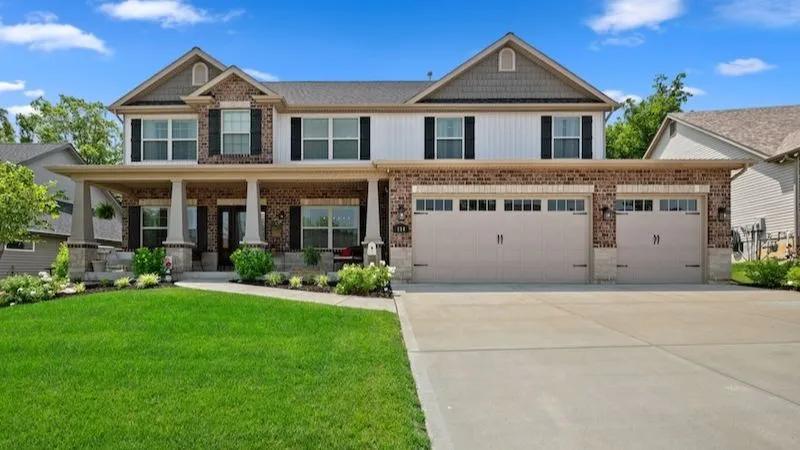
What to Fix Before Selling a House in St. Louis
Get your house ready early, so it can go live the day you need it to.
Read More
Questions to Ask a Realtor When Selling
25 questions to ask any agent, and how we answer them.
Read More
Best Mortgage Lenders in St. Louis
The lenders we trust, including bridge loans and buying before you sell.
Read More